2nd Conference Emerging environmental contaminants – current status, challenges and perspectives - Rzeszów September 2026
Dear Colleagues,
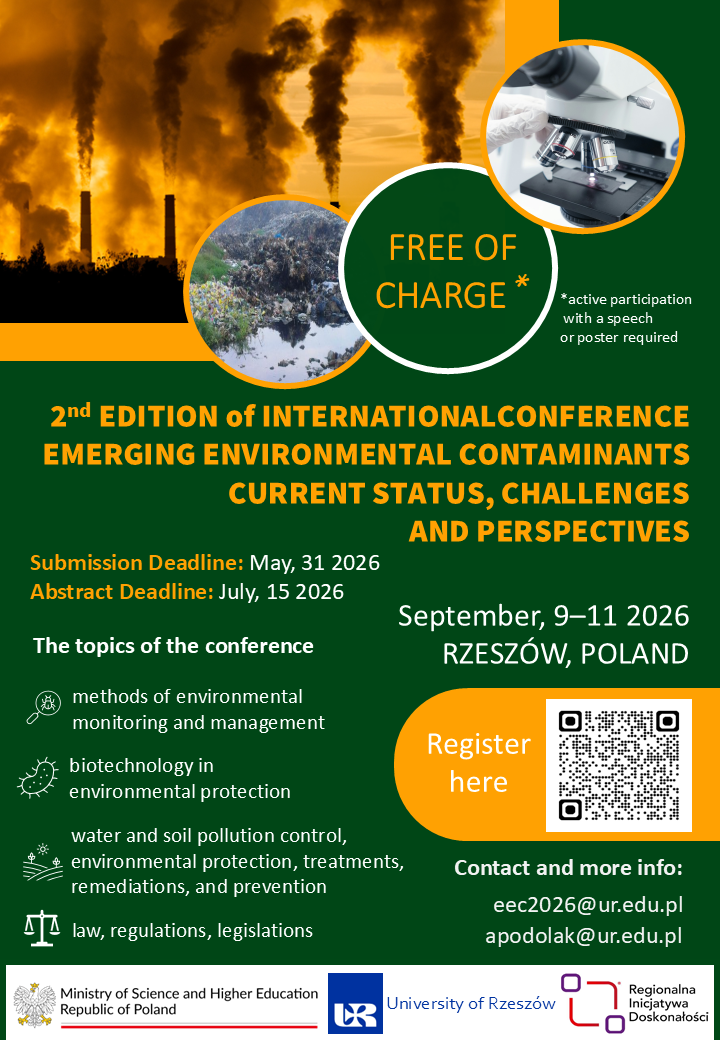
We are pleased to invite you to the 2nd edition of the conference “Emerging Environmental Contaminants – Current Status, Challenges and Perspectives”, which will be held in person in University of Rzeszów, Poland.
This year’s event will once again bring together researchers, practitioners, and experts from various disciplines to discuss one of the most pressing challenges of our time: identification and solutions to emerging environmental contaminants. The conference will provide a platform for presenting the latest scientific findings, exchanging experiences, and fostering collaboration in environmental protection.
The program will include keynote lectures, panel discussions, and interactive workshops focusing on the sources, occurrence, and effects of contaminants, including pesticides, dyes, microplastics, pharmaceuticals, and nanoparticles. Particular attention will be given to their impact on human health and ecosystems, as well as to current approaches in monitoring, prevention, and remediation.
The conference is held under the honorary patronage of His Magnificence the Rector of the University of Rzeszów, the Committee on Biotechnology of the Polish Academy of Sciences (PAN), and the mayor of Rzeszów, Konrad Fijołek.
The in-person conference will take place in Rzeszów on September 9-11, 2026.
The conference is dedicated to discussing together one of the greatest challenges of modern times - emerging environmental pollution. During the event, we will focus on sources and effects of pollutants such as pesticides, PFAS, microplastics, pharmaceuticals, and nanoparticles, as well as on their impact on human health and ecosystems. The aim of the conference is to present the current state of knowledge and share experiences in the field of environmental pollution. In addition, the organizers' intent is to activate and integrate the academic community, create a place conducive to the exchange of ideas and information. The conference will also provide an ideal environment for developing new cooperation and meetings with experts.
Conference topics include, but are not limited to:
- Environmental Monitoring and Management
- Water and Soil Pollution Control
- Environmental Protection, Treatment, Remediation, and Prevention
- Biotechnology in Environmental Protection
- Environmental Law, Regulations, and Policy
- Pollution, Well-being, and Quality of Life
We warmly encourage you to contribute your research, insights, and innovations to an international audience. Your participation will help advance scientific understanding and support the development of effective solutions to emerging environmental challenges.
We look forward to welcoming you in Rzeszów.
Keynote speakers
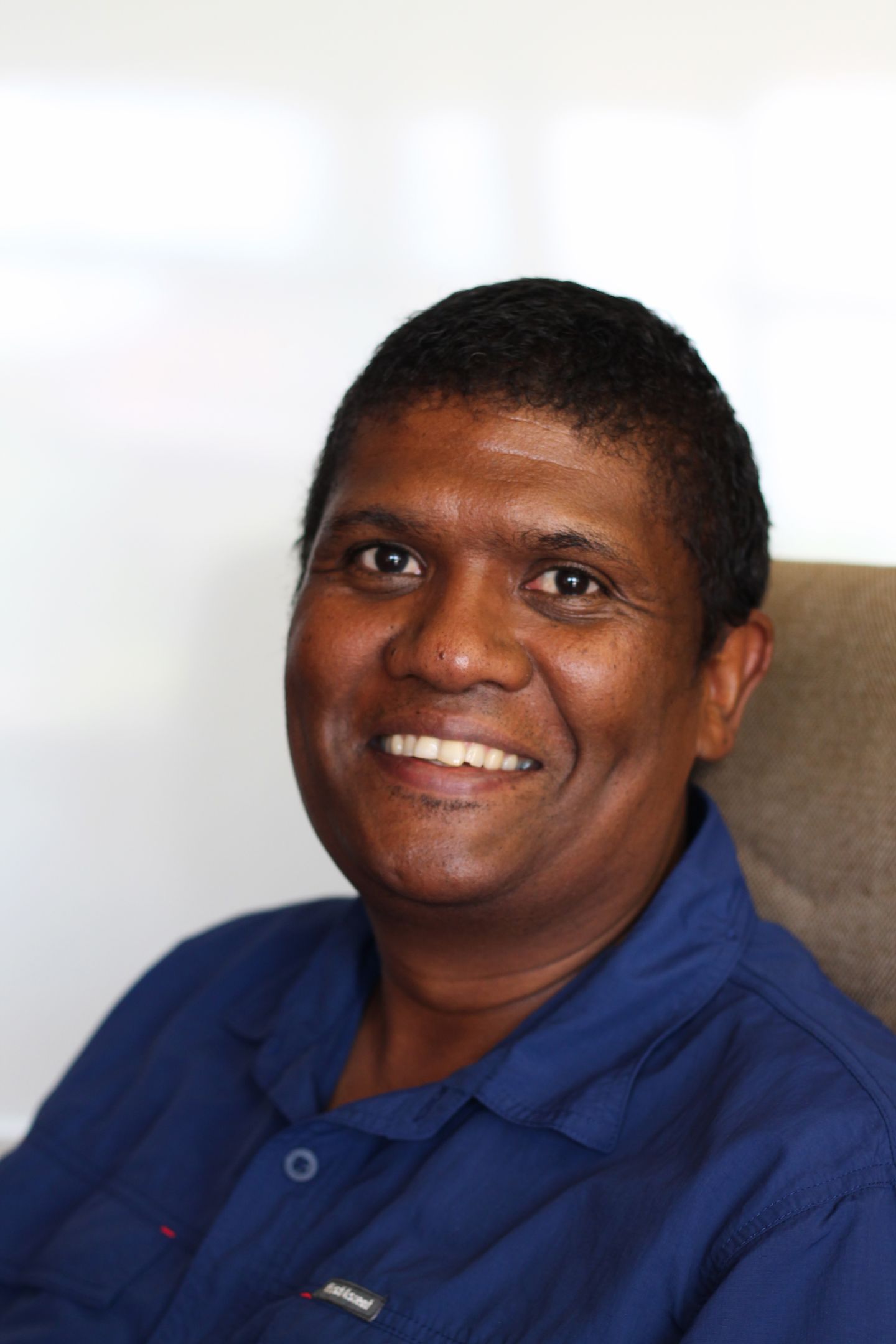
Mark Maboeta is a Full Professor of Zoology at North-West University (South Africa) and an NRF B-rated scientist with over two decades of experience in environmental sciences and research leadership. His work focuses on soil ecotoxicology, particularly the effects of pollutants on soil ecosystems and their implications for environmental risk assessment, biodiversity conservation, and sustainable land management.
He leads one of the foremost soil ecotoxicology research groups in Africa and has published extensively in high-impact international journals. His research is widely recognised for bridging science, policy, and practice, advancing both academic research and real-world environmental solutions.
He has held several leadership roles, including Acting Director of the Centre for Water Sciences and Management, and has served on national and international bodies, including the NRF Specialist Committees and the FAO’s soil pollution initiatives. He is actively involved in global research networks and regularly contributes as a scientific chair and invited speaker at major international conferences.
His current work emphasises integrating research, innovation, and policy to address pressing environmental challenges in Africa and beyond.
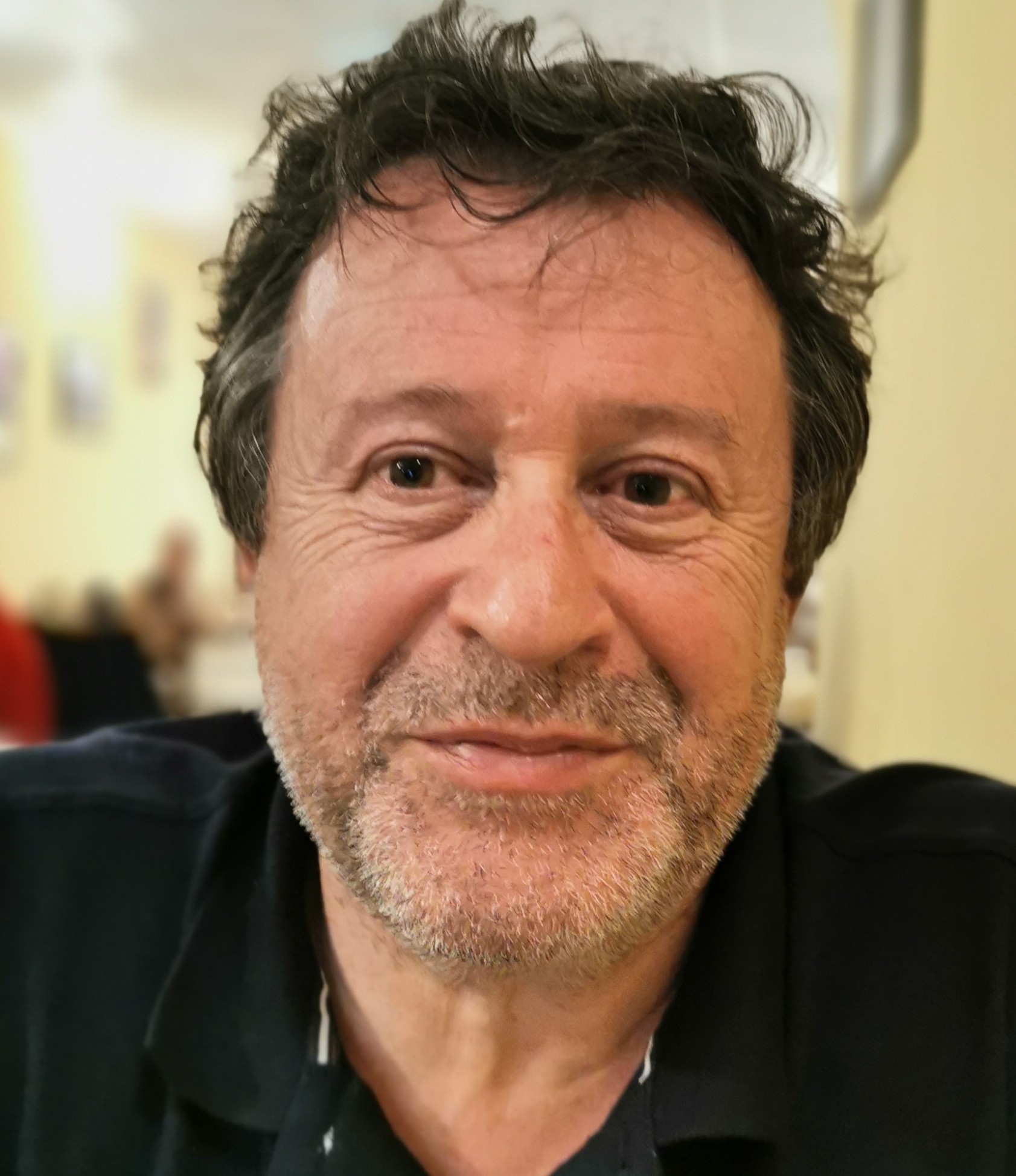
Kiril Bahcevandziev is a full time Professor at an Agricultural School of Coimbra, Polytechnic of Coimbra, Portugal, managing different curricular units mainly related with Plant biotechnology and Horticulture. Currently, he is an integrated researcher at the Research Centre for Natural Resources, Environment and Society, responsible for its Agriculture group of scientists. During the last 38 years, including full-time research, he has been involved in different scientific activities, producing various scientific publications in international referred journals. Makes and made part of different scientific boards in international congresses and conferences. He is invited professor at different universities in Republic of North Macedonia, Croatia, Czech Republic, Moldavia, Greece, Italy, Romania, Netherlands, Poland, teaching mainly in the fields related with his research work where he develops projects regarding seaweeds as biofertilizers and biostimulants in agriculture. Makes/made part of the research groups of various scientific projects related with sustainable water use and effective farming practices to protect water resources in Mediterranean rice-based agro-ecosystems (two PRIMA projects); valorisation of seaweeds and its application as organic agricultural/urban waste compost and use of organic biopreparations in plants against pathogens. He is/was member and collaborate with different national and international scientific societies, such as Portuguese Horticultural Association (APH), ISHS, EUCARPIA, Portuguese Association of Plant Physiology, ASHS and Biotechnology Information Center (CiB).
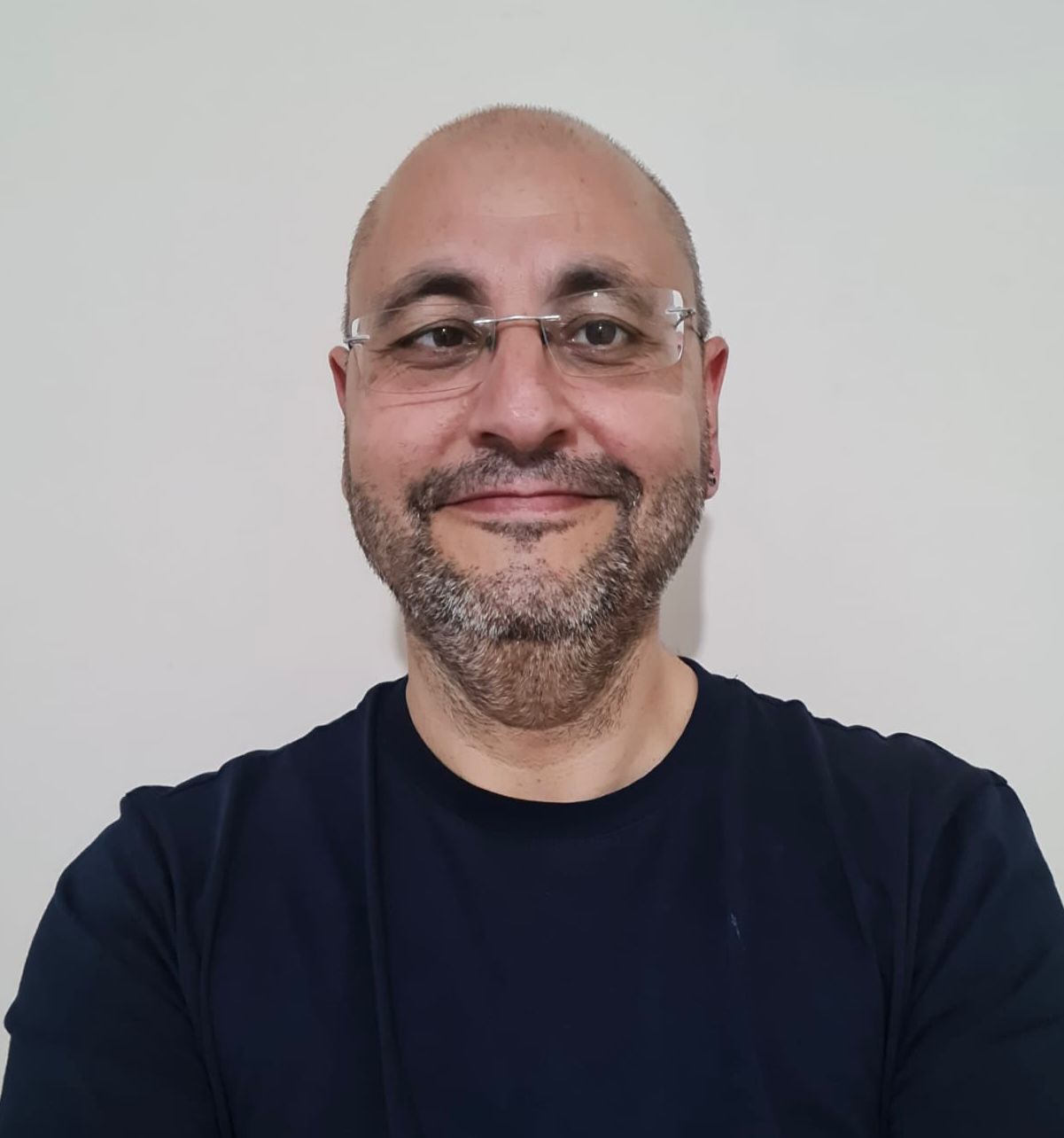
Cüneyt Nadir Solak is an academician at Dumlupınar University Biology Department in Türkiye. He is working on taxonomy and biogeography of the diatoms. He has been taken place national and international projects about distribution of the diatoms in extreme environments like highly acidic, highly alkaline and hypersaline conditions in different regions in the World. In this concern, he worked in Algeria (Sahara Desert) and Iran (Lut Desert) as hypersaline environments, highly alkaline lakes in Türkiye (Van and Salda Lakes) and Indonesia (Kawah Putih Lake), highly acidic environments in Türkiye (mining areas) and Portugal (Sao Domingo). He has been involved in various scientific publications in international referred journals. He has been invited or joined as visiting researcher to work in different diatom laboratories in US (Colorado Boulder University), Canada (Canadian Museum of Nature), Russia (Russian Academy of Science), Poland (W.Szafer Botanic Institute, Institute of Nature Conservation, Szczecin and Rzeszow Universities) and Hungary (Danube Research Center). Up to now, he described with his colleagues more than 50 diatom taxa from inland waters and marine environments in Türkiye, Indonesia, Russia, Algeria and Iran.
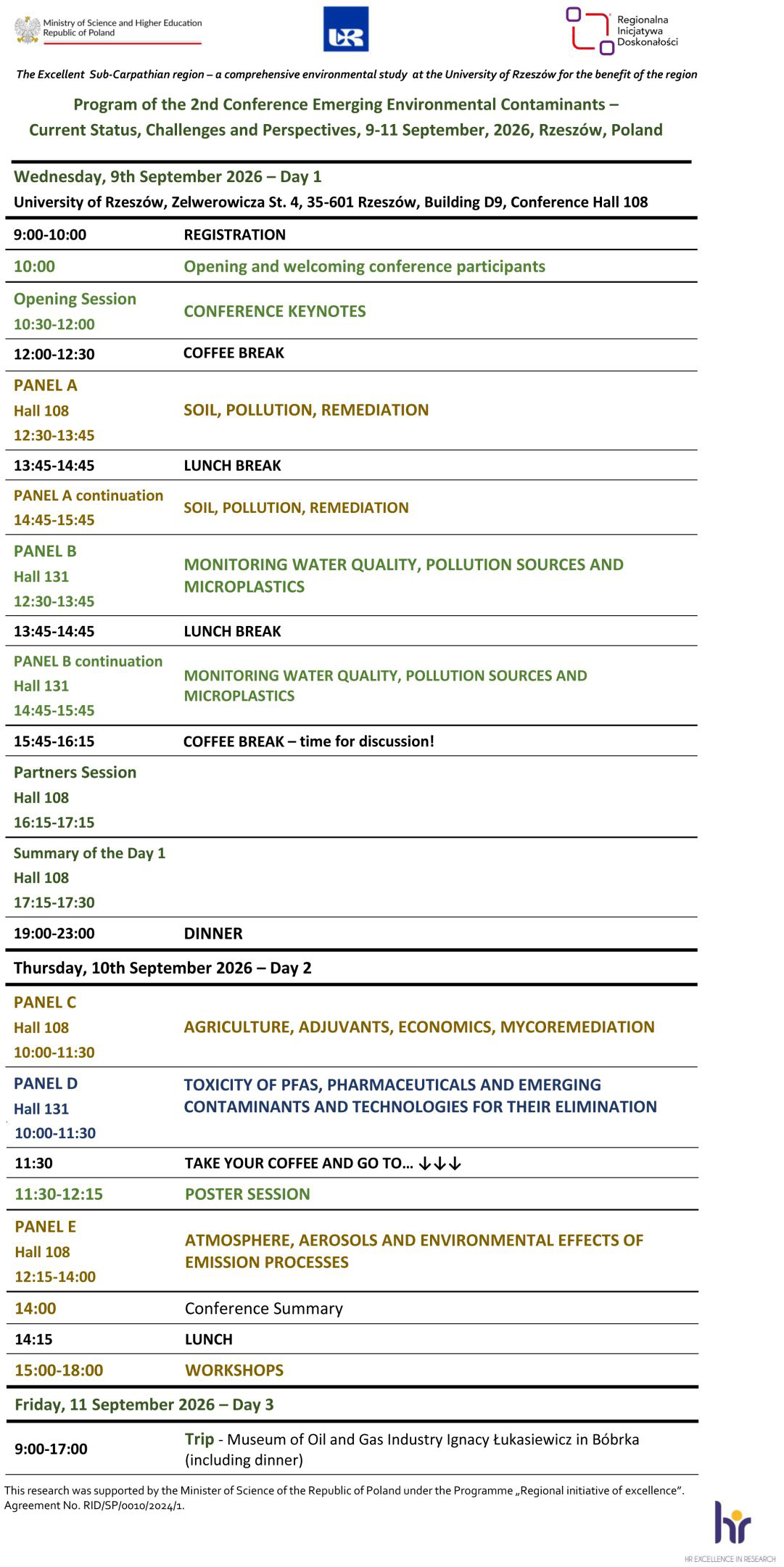
Book of abstracts
Conference fees, terms and conditions
The conference is completely free of charge. However, the organizers do not cover the costs of accommodation and travel.
Only active participation in the conference is accepted – with an oral presentation or poster presentation. Passive participation in the conference is not possible.
Time reserved for the oral presentation (including discussion): 15 minutes
The poster session will take the form of an open discussion around the posters.
Registration for the conference has closed.
Workshops
During the conference, participants will have the opportunity to take part in additional workshops.
Information regarding registration for the workshop has been provided to the participants. Space is limited, and registration is on a first-come, first-served basis.
If you decide not to attend a workshop, please contact the Conference Secretary to allow someone from the waiting list to take your place.
Workshops:
Advanced Applications of ICP-MS in Environmental Pollution Monitoring
The workshop focuses on the practical aspects of using ICP-MS spectrometry in environmental research. Participants will learn about the latest methods for determining trace elements in water, soil, sediments, and biological materials, with particular emphasis on interference control, sample preparation, and data interpretation. The sessions will also include a discussion of real-world research cases and best analytical practices. The workshop is aimed at analysts, researchers, and practitioners interested in enhancing their skills in working with ICP-MS technology.
Participant limit: 10 people
Hands-On Training in Environmental Toxicity Assessment
This workshop focuses on the practical aspects of environmental toxicity assessment using modern bioassays applied in the analysis of environmental samples. Participants will learn about the principles of operation and potential applications of selected systems used in ecotoxicological research and environmental safety assessment. During the sessions, methods for assessing the toxicity of liquid samples using the BioLight, Daphtoxkit, and Algaltoxkit systems will be presented, as well as methods for testing the toxicity of solid samples, including soils, using the Phytotoxkit and Ostracodtoxkit tests. The workshop will also cover topics related to the assessment of drinking water quality using the TOXmini and Rapidtoxkit systems. The training is intended for researchers, analysts, and individuals interested in the practical application of biological methods in environmental monitoring and risk assessment.
Participant limit: 12 people
Algae Isolation and Cultivation – Applications in Ecological and Taxonomic Research
The workshop focuses on the practical aspects of establishing and maintaining laboratory cultures of freshwater and marine algae. Participants will learn the basic steps involved in working with biological material—from collecting environmental samples, through their transport and storage, to the isolation of specific algae species. During the sessions, methods for preparing culture media and the equipment used in subsequent stages of laboratory research will be discussed. Special attention will be given to diatoms—one of the most challenging groups of algae in terms of laboratory culture. However, the procedures and best practices presented will also be applicable when working with other groups of algae. The final part of the workshop will cover the preparation of samples for microscopic analysis and the creation of permanent slides used in biological and environmental research. The training is aimed at students, researchers, and anyone interested in practical methods for working with algae in laboratory conditions.
Participant limit: 10 people
Turbidity Measurement – From Sample Collection to Reliable Results
Turbidity is one of the key parameters monitored in water treatment and purification processes and has a wide range of applications in environmental protection. However, obtaining accurate and repeatable measurement results depends on many factors – from proper sample collection and preparation, through correct instrument calibration, to the appropriate measurement technique. During this training, we will discuss the most important aspects affecting the quality of turbidity measurements and present best laboratory practices. The hands-on workshop session will be conducted using WTW instrumentation, allowing participants to perform calibration procedures, prepare samples, and carry out turbidity measurements themselves. We invite everyone who would like to deepen their knowledge and gain practical skills essential for obtaining reliable turbidity measurement results.
Participant limit: 20 people
Important information for participants
IMPORTANT DATES:
REGISTRATION CLOSED
Abstract Deadline: July, 15 2026 (Please send the abstract to the following address: eec2026@ur.edu.pl)
The trip on the third day of the conference is optional and depends on the number of participants.
Abstract template
Time reserved for the oral presentation (including discussion): 15 minutes
Poster preparation requirements
The poster design is just a suggestion. The poster session will take the form of an open discussion around the posters.
Conference location:
How to get from Rzeszow Airport to the city by bus
How to get from Rzeszow Airport to the city by train
In Rzeszów, you can also use taxi apps such as Bolt, FreeNow, and Uber
Accommodation
Attendance at the conference is completely free of charge. However, the organizers do not cover accommodation costs. Below are a few places located near the conference venue that you may wish to consider. However, you are also welcome to stay at other accommodations available in Rzeszów.
Hotel Villa Riviera:
118 Sikorskiego Street
Standard Single Room (bed&breakfast) - 250 PLN
Standard Double Room (b&b) - 350 PLN
Hotel Zimowit
4b Armii Krajowej Street
Standard Single Room (bed&breakfast) - 350 PLN
Standard Twin Room (b&b) - 450 PLN
Hotel Classic
32 Armii Krajowej Street
Standard Single Room (bed&breakfast) - 250 PLN
Standard Double Room (b&b) - 350 PLN
Park Apartament (Booking)
7 Sikorskiego Street
Single Room - 159 PLN
Double Room - 259 PLN
Accommodation is also available in the UR dormitories located right next to the conference venue, "Mercury" and "Hilton".
Pricing:
Single room – 130 PLN per night
Double room – 160 PLN per night (80 PLN per person).
In both cases, these are single rooms within a dormitory unit.
Student Dormitories
2b/2c Ćwiklińskiej Street
Scientific Committee
-
Jadwiga Stanek-Tarkowska, Ph.D., D.Sc., Professor, University of Rzeszów, Poland - Head of the Scientific Committee
-
Renata Gaj, Ph.D., D.Sc., Professor, Wrocław University of Environmental and Life Sciences, Poland
-
Idalia Kasprzyk, Ph.D., D.Sc., Professor, University of Rzeszów, Poland
-
Kiril Bahcevandziev, Ph.D., D.Sc., Professor, Polytechnics of Coimbra, Portugal
-
Mark Maboeta, Ph.D., D.Sc., Professor, North-West University, RPA
- Myroslav Malovanyy, Ph.D., D.Sc, Professor, Lviv Polytechnic National University, Ukraine
-
Cüneyt Nadir Solak, Ph.D., D.Sc., Professor, Dumlupinar University, Turkey
-
Emilia den Boer, Ph.D., D.Sc., Associate profesor, Wrocław University of Science and Technology, Poland
-
Justyna Koc-Jurczyk, Ph.D., D.Sc., Associate profesor, University of Rzeszów, Poland
-
Łukasz Jurczyk, Ph.D., D.Sc., Associate profesor, University of Rzeszów, Poland
-
Maciej Thomas, Ph.D., D.Sc., Associate profesor, Cracow University of Technology, Poland
-
Małgorzata Kus-Liśkiewicz, Ph.D., D.Sc., Associate profesor, University of Rzeszów, Poland
-
Ewa Szpyrka, Ph.D., D.Sc., Associate profesor, University of Rzeszów, Poland
-
Zuzana Melichová, RNDr., Ph.D., Associate profesor, Matej Bel University, Slovakia
-
Viktória Mannheim, PhD., University of Debrecen, Hungary
-
Joanna Struk-Sokołowska, Ph.D., Bialystok University of Technology, Poland
-
Zuzanna Sylwestrzak Ph.D., University of Gdańsk, Poland
-
Aleksandra Wdowczyk, Ph.D., Wrocław University of Environmental and Life Sciences, Poland
- Joana Rocha, M.Sc., CI.CMAC, Municipality of Figueira da Foz, Portugal
Organising Committee
- Justyna Koc-Jurczyk, Ph.D., D.Sc., Associate professor - Head of the Organizing Committee
- Agnieszka Podolak, Ph.D., University of Rzeszów - Vice Head
- Łukasz Jurczyk, Ph.D., D.Sc., Associate professor, University of Rzeszów - Secretary
- Jadwiga Stanek-Tarkowska, PhD, D.Sc, Professor, University of Rzeszów
- Marta Jańczak-Pieniążek, Ph.D., D.Sc., Associate professor, University of Rzeszów
- Małgorzata Szostek, Ph.D., D.Sc., Associate professor, University of Rzeszów
- Dagmara Migut, Ph.D., University of Rzeszów
- Łukasz Peszek, Ph.D., University of Rzeszów
- Magdalena Podbielska, Ph.D., University of Rzeszów
- Mateusz Rybak, Ph.D., University of Rzeszów
- Karol Skrobacz, Ph.D., University of Rzeszów
- Zuzanna Sylwestrzak, Ph.D., University of Gdańsk
- Bernadetta Alvarez, M.Sc., University of Rzeszów
- Marcin Pieniążek, M.Sc., University of Rzeszów
Partners





Scientific Partners
Honorary Patronage
Contact to Conference secretary's office
University of Rzeszow, Faculty of Technology and Life Sciences, Institute of Agricultural Sciences, Environmental Protection and Management, Department of Soil Science, Environmental Chemistry and Hydrology, Cwiklinskiej Str. 1a, 35-601 Rzeszów
eec2026@ur.edu.pl
[email protected]
[email protected]
The Excellent Sub-Carpathian region – a comprehensive environmental study at the University of Rzeszów for the benefit of the region
This conference is supported by the Minister of Science of the Republic of Poland under the Programme „Regional initiative of excellence”. Agreement No. RID/SP/0010/2024/1.