
KEYNOTE SPEAKERS
Lieven Buysse (KU Leuven – Brussels, Belgium)
Vassiliki Markidou (National and Kapodistrian University of Athens, Greece)
Rafał Molencki (University of Silesia in Katowice)
Meet the plenary speakers of PASE 2026
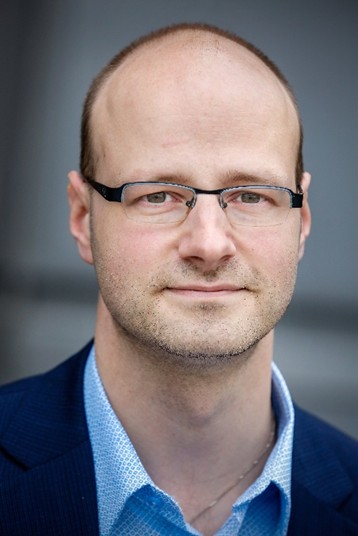
Lieven Buysse
KU Leuven (Belgium)
Lieven Buysse is professor of English Linguistics at KU Leuven (Belgium). His research is in pragmatics, and he is the Book Reviews Editor of the journal Corpus Pragmatics. After having served as Vice-Dean of Education (2011-2017) and Campus Dean (2017-2025) of the university’s Faculty of Arts in Brussels, he was appointed Academic Director of KU Leuven’s Brussels campuses in 2025. He served as Secretary (2006-2012) and then President (2012-2018) of the Belgian Association of Anglicists in Higher Education and is currently President of the European Society for the Study of English (ESSE).
Plenary talk
At the end of the day, pragmatic expressions matter
Pragmatic markers and pragmatic expressions serve as signposts that guide utterance interpretation and convey speaker attitudes in speech as well as writing. Typically, they are the result of pragmaticalisation processes, whereby they shed off their propositional meaning in a process of semantic bleaching while gaining pragmatic meaning in a process of pragmatic enrichment. Adverbs expressing ‘time’ have proved their use in discourse organisation. Now, for example, has been described quite extensively as a topic changer or stance marker. Other markers have received considerably less scholarly attention, such as the pragmatic expression at the end of the day. Taken literally, it denotes a relatively specific time reference, but it also appears to have evolved into a more general process marker, which has even been denounced by language commentators as a vogue term or as redundant. In this lecture, we will trace how at the end of the day is used in a variety of registers in contemporary English, such as TED Talks and parliamentary speech, and gauge its potential influence on similar such expressions in a related language such as Dutch.

Rafał Molencki
University of Silesia in Katowice (Poland)
Professor Rafał Molencki is Professor of Humanities at the University of Silesia in Katowice, where he is affiliated with the Institute of Linguistics. A graduate of the University of Silesia, he is a distinguished historical linguist and anglicist whose research has focused chiefly on the syntax, semantics, and lexis of medieval English, with particular attention to grammaticalization, counterfactuality, and the history of English tense-aspect and subordination. His publications include Complementation in Old English (1991), A History of English Counterfactuals (1999), and Causal Conjunctions in Mediaeval English: A Corpus-based Study of Grammaticalization (2012), and more than 60 articles and chapters, which appeared mainly in international journals and prestigious publishing houses. He was Dean of the Faculty of Philology at the University of Silesia from 2008 to 2016, member of the Science Evaluation Committee in 2019-2022, is Chair of the Linguistics Commission of the Polish Academy of Sciences, Katowice Branch and Editor-in-Chief of Linguistica Silesiana, and has been closely involved in national and international academic initiatives, including a Fulbright fellowship at Stanford University in 1994/95.
Plenary talk
Past, distant, unreal: a diachronic view of past constructions in English
In numerous languages one can find backshifted tense forms in counterfactual and hypothetical constructions, which has led many to treat formally past forms as not only temporally but generally remote or distant (e.g. Jespersen 1940, Joos 1964, Fleischman 1989, Palmer 2014). Since the past tense morpheme also means hypothetical, some linguists (most notably Steele 1975, Langacker 1978, Schulz 2017) argued that in these languages the basic meaning of the morphological element is not past tense but rather distant from present reality. It was even suggested that there was a universal semanticprimitive involved.
In the paper we will look at the diachronic development and grammaticalization of the past and the pluperfect tense forms in English in the cross-linguistic perspective.
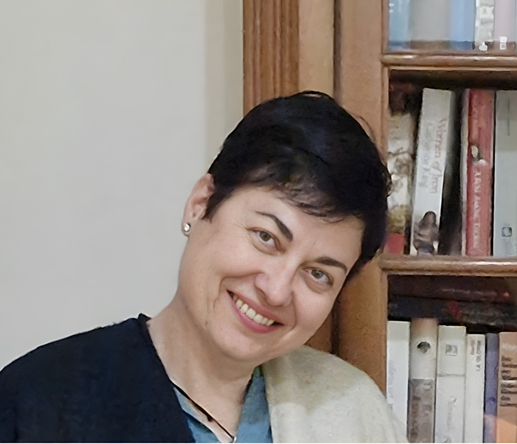
Vassiliki Markidou
National and Kapodistrian University of Athens
Vassiliki Markidou is Associate Professor of English Literature and Culture at the Department of English Language and Literature, National and Kapodistrian University of Athens. Her teaching and research interests lie in 16th to 18th-century English literature as well as travel literature. She has co-edited Shakespeare and Greece (The Arden Shakespeare) (Bloomsbury, 2017), Precarious Identities: Studies in the Work of Fulke Greville and Robert Southwell (Routledge, 2020), and the second special issue of the Anglophone journal of comparative literary studies, Synthesis, entitled Configurations of Cultural Amnesia (2010). She has published extensively in international journals and collective volumes and is currently researching memory, forgetfulness, and gender in early modern English life-writing. She is President of the Hellenic Association for the Study of English (HASE), Board Member of the European Society for the Study of English (ESSE), and an active member of various internationally acclaimed associations in her fields of interest.
Plenary talk
Re-presentations of memory (and forgetfulness) in early modern verse life-writing: the case of “The Memorandum of Martha Moulsworth, Widow” (1632)
Is there a gendered experience of memory? How was memory structured in early modern life-writing? How did early modern women’s experiences of memory shape their self-reflective textual artifacts? How do form and memory fashion early modern women’s autobiographical poetry? How does the interrelationship between memory and forgetfulness affect storytelling, and particularly early modern women’s verse self-writing? I will address these methodological questions through a striking case study of early modern verse life-writing, The Memorandum of Martha Moulsworth, Widow (1632), which constitutes the earliest poetic autobiography penned by an English female. In so doing, this talk will attempt to map how early modern English women’s verse life-writing opens a window onto early modern subjectivity and its complex relationship to gender, remembrance, and forgetting, and offers itself to the living as a mirror wherein they can see themselves and ponder the dialectical relation of life and death.