
Keynote Speaker
Meet the plenary speakers of ATENA 2026
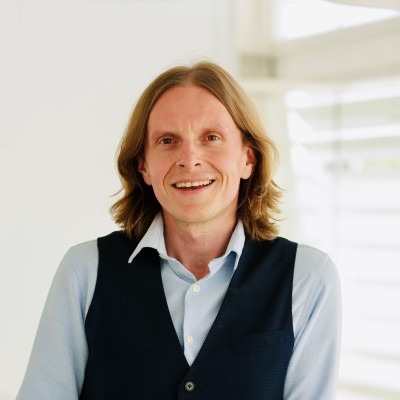
Dr. Mateusz Pietraszek is a linguist, lecturer, and pronunciation coach currently affiliated with Universidad Complutense de Madrid. His academic and professional work focuses on phonetics and applied linguistics, with particular emphasis on pronunciation.
He holds a PhD in English Linguistics from Universidad Complutense de Madrid. He graduated in Spanish Studies from Jagiellonian University in 2007, where he also obtained his teaching qualification and studied French and Catalan. He earned his Master’s degree from Autonomous University of Madrid in 2009 and completed a Postgraduate Certificate in Translation and Linguistics at Universitat Oberta de Catalunya.
With over 15 years of teaching experience, he has worked as a lecturer and assistant professor of English, phonetics, and phonology, including at Universidad Francisco de Vitoria. He has also taught Spanish as a foreign language and served as a certified DELE examiner for all levels with Instituto Cervantes from 2017 to 2024.
He is a passionate polyglot who speaks Polish, English, Spanish, French, Catalan, German, and Esperanto, and has working knowledge of Italian and Portuguese. He is also a member of HYPIA, an international organization that brings together individuals who study and speak multiple languages at an advanced level.
Plenary talk
Polyglot: A Number, a Skill or a Mindset?
This plenary explores the concept of the polyglot, addressing the challenges of defining the term and its relationship with multilingualism. Rather than drawing a strict boundary, it considers how “polyglot” overlaps with, yet also diverges from, multilingualism, particularly in terms of learning practices, agency, and identity. It traces historical perspectives and reviews key findings from early and recent research, focusing on motivation and sustained engagement. The talk also examines the social dimension of polyglots, including communities, events, and identity construction, as well as the influence of digital environments on representations of language learning. It proposes a shift from viewing polyglots as a fixed category towards understanding them as learners engaged in ongoing processes of practice and development, and concludes by outlining potential research directions within contemporary applied linguistics.