News
Archaeologists from the University of Rzeszów Uncover Eneolithic Settlement Remains and a Medieval Burial Ground in Orły
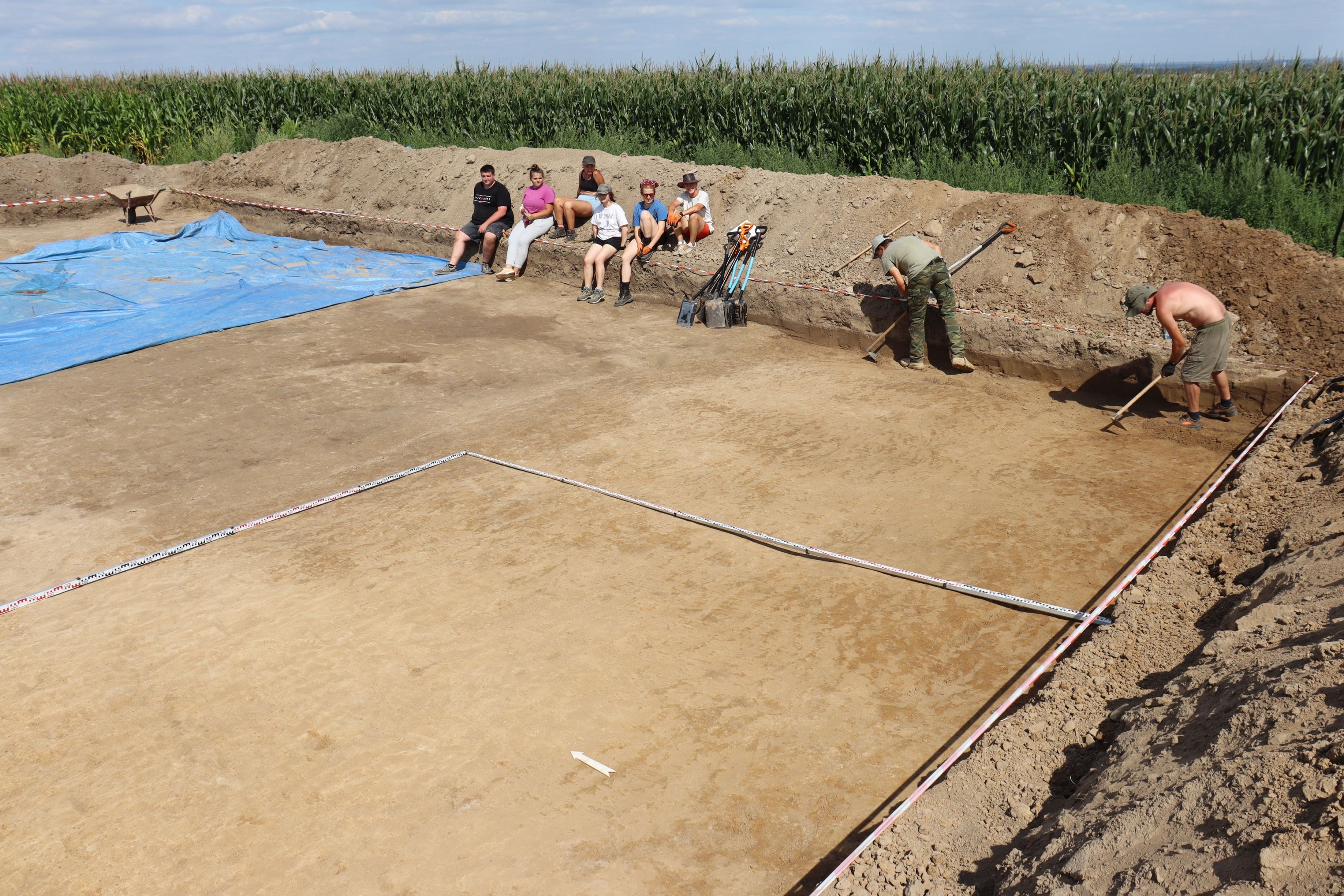
In August this year, a team from the Institute of Archaeology, University of Rzeszów carried out excavations at one of the most intriguing archaeological sites in the Subcarpathian region — in Orły (Przemyśl County, Podkarpackie). This is the third research season at the site and it has delivered exceptional results.
Eneolithic (Copper Age) settlement, c. 5,500 years old
Under the direction of Dr Dariusz Król, the work focused on identifying traces of human activity provisionally dated to c. 3650–3350 BCE. Earlier geophysical surveys enabled the team to pinpoint the most promising areas for excavation.
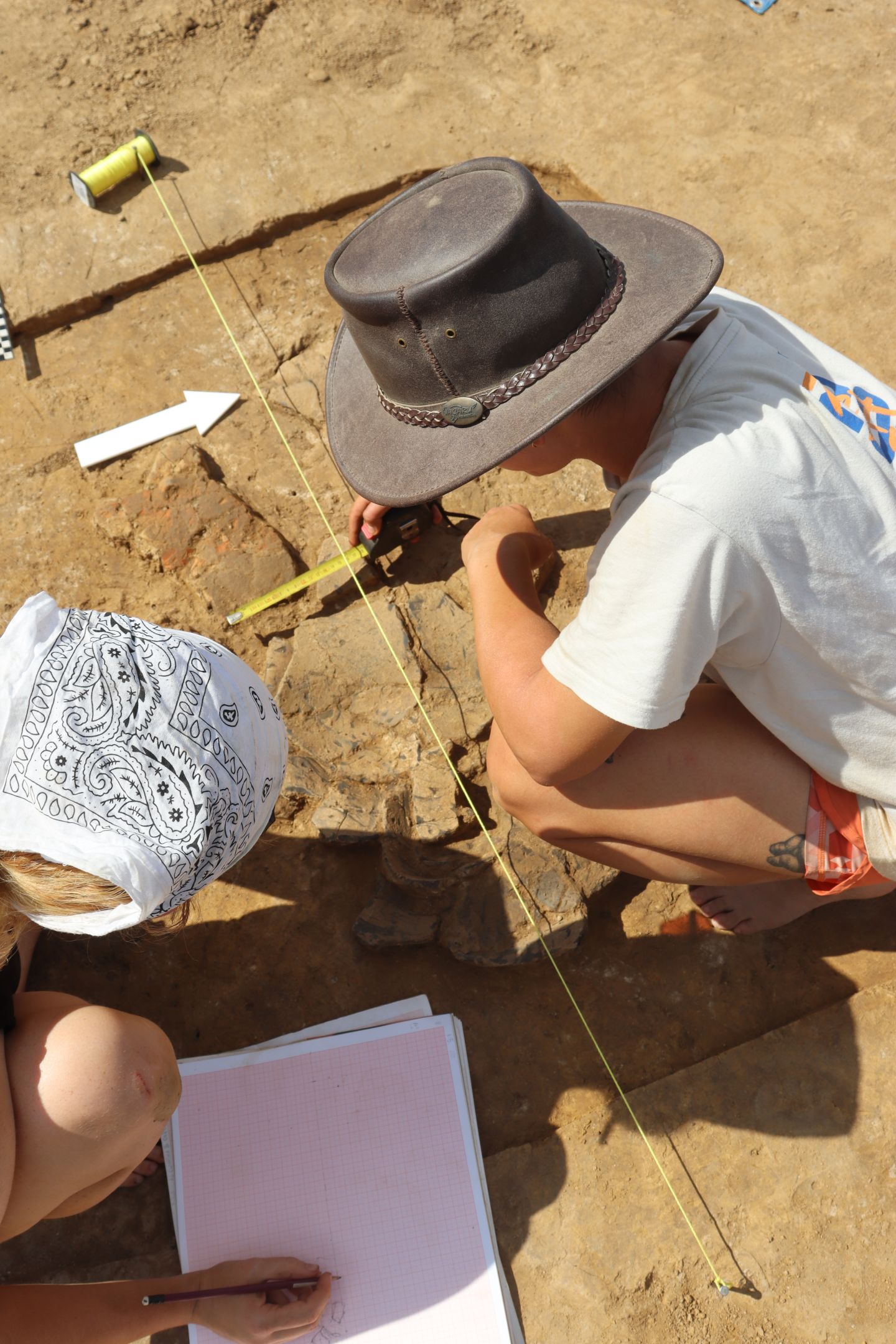
The investigations revealed a dozen or so domestic/storage pits containing:
- fragments of ceramic vessels (including cups, amphorae and collared flasks),
- flint tools,
- stone querns,
- animal remains.
‘This season’s work has not only allowed us to identify valuable artefacts, but also to reconstruct elements of the spatial organisation of an Eneolithic settlement dated to around 3650–3350 BCE. Among other things, we have determined the probable location of one of the houses and its economic hinterland,’ says Dr Dariusz Król.
Medieval burial ground
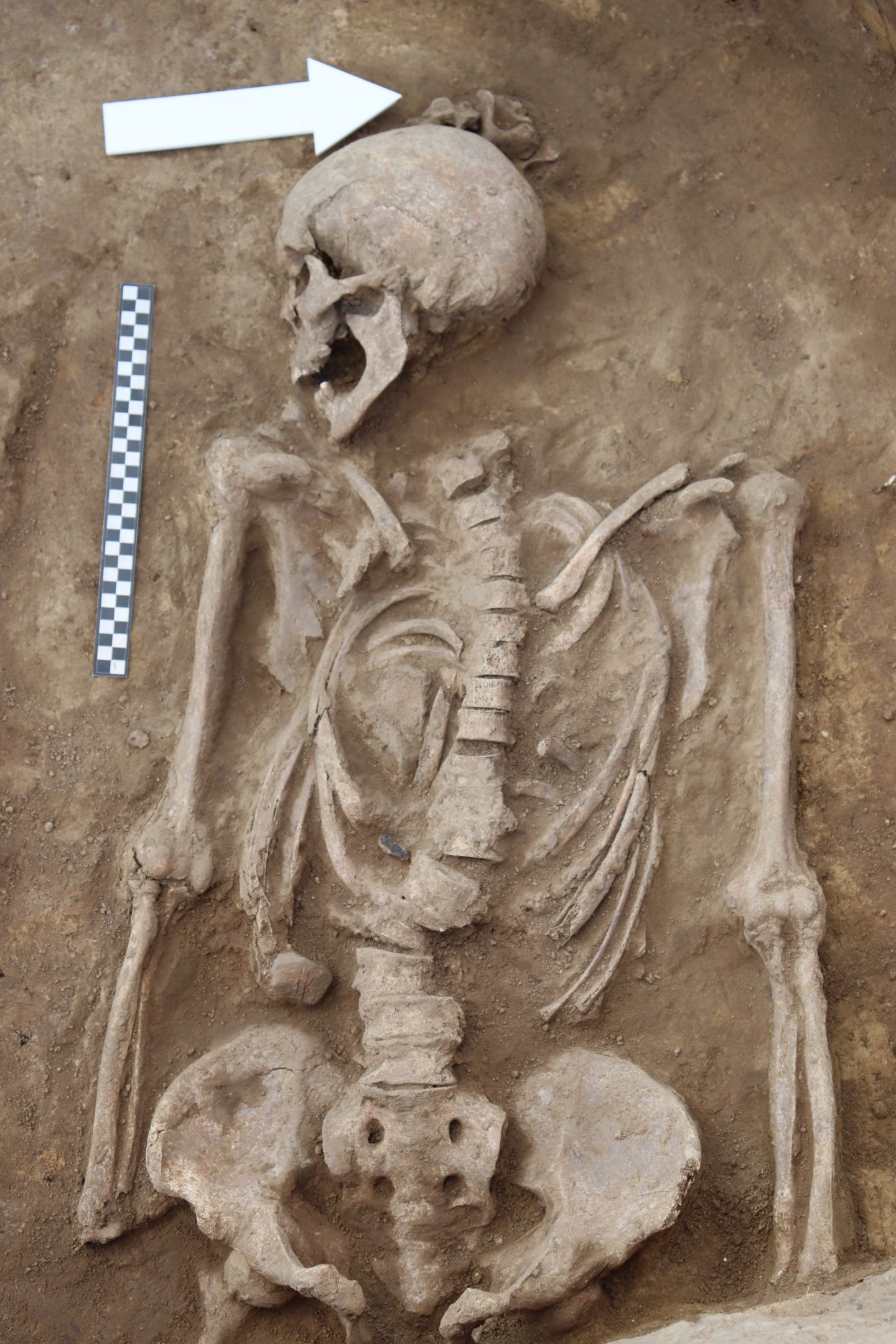
This year’s excavations also uncovered five medieval inhumations dating to the 11th–12th centuries, of both males and females, laid in simple graves aligned on an east–west axis.
‘This did not come as a surprise. We had already found the first medieval graves in 2023, so we knew that before reaching the Eneolithic layers we might encounter such finds,’ adds Dr Król.
Interdisciplinary palaeoenvironmental research
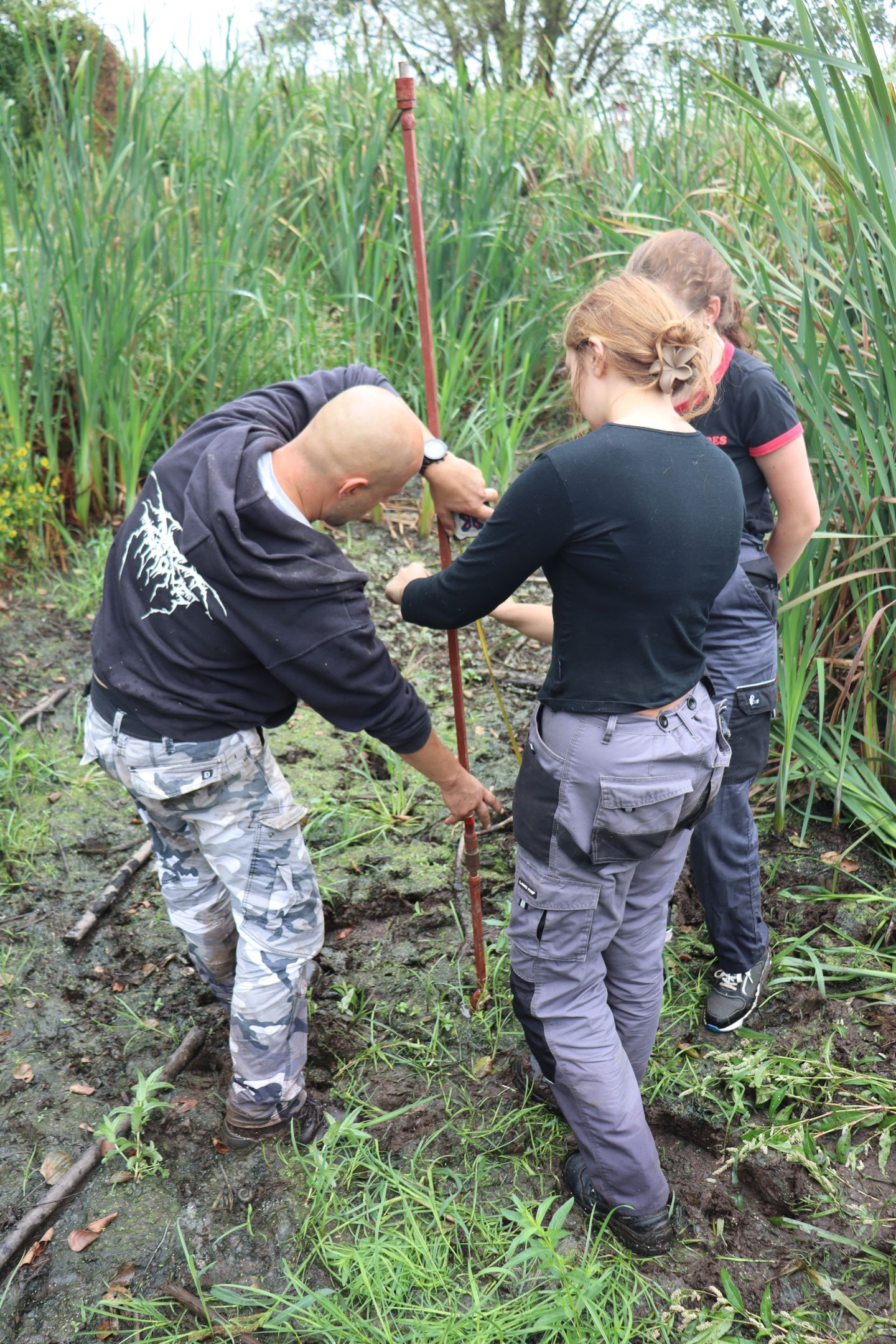
In parallel with the excavations, the team is conducting intensive palaeoenvironmental analyses in collaboration with Associate Professor Jakub Niebieszczański from Adam Mickiewicz University, Poznań (AMU). A series of boreholes was drilled in the immediate vicinity of several Eneolithic settlements, and sediment cores were taken to reconstruct past environmental conditions.
‘This interdisciplinary approach enables us to combine archaeological and environmental data, providing a fuller picture of life 5,500 years ago,’ emphasises Dr Król.
Project and support
The research forms part of the project ‘External impulses, internal changes: communities of the Funnel Beaker Culture on the Kańczucka Upland in the 4th millennium BCE’, conducted within the first edition of the University of Rzeszów’s Programme for the Development of the Humanities and Social Sciences, announced by the Rector of the University of Rzeszów, Prof. Adam Reich.
The excavations in Orły were co-funded by the Voivodeship Heritage Protection Office in Przemyśl.