
Group of Microbial Metabolic Engineering
Team leader
Assoc. Prof. Justyna Ruchała; jruchala@ur.edu.pl, ORCID 0000-0003-2850-6073
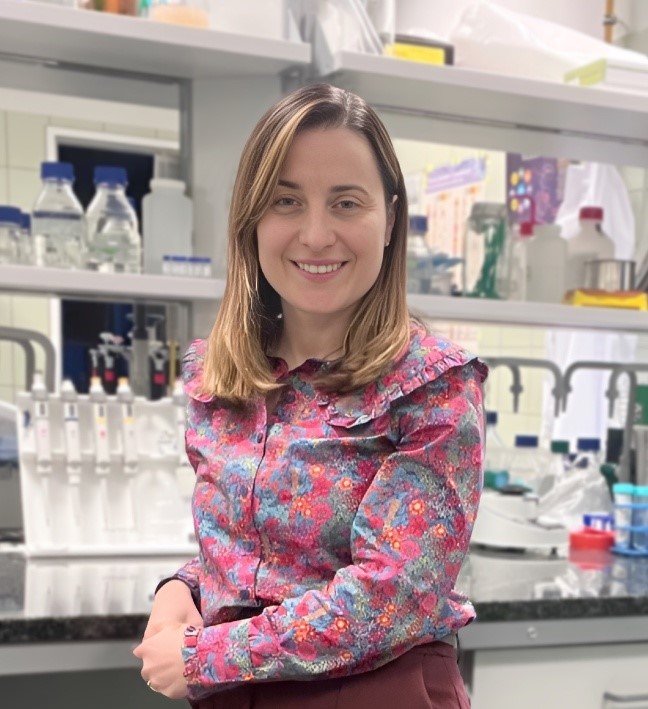
Dr hab. Justyna Ruchała is an academic and researcher in the field of Natural Sciences, specializing in Biological Sciences and Biotechnology, with a primary focus on fundamental aspects of microbial metabolism and yeast biology. She began her academic education at the University of Rzeszów, where she obtained a Bachelor’s degree in Biology in 2009 and a Master’s degree in Biology in 2011. In 2015, she was awarded the degree of Doctor of Biological Sciences by the University of Rzeszów. In recognition of her significant and independent scientific achievements, she attained the degree of Habilitated Doctor (dr hab.) in 2022 in the discipline of Biological Sciences within the field of Natural Sciences, conferred by the University of Gdańsk. Since 2015, dr hab. Ruchała has been affiliated with the University of Rzeszów, where she currently holds the position of associate professor. Her scientific research is centered on fundamental mechanisms governing microbial metabolism, regulatory networks, and cellular adaptation in non-conventional yeasts. In particular, her work addresses how yeast cells metabolize non-preferred carbon sources, including pentoses, and how these metabolic pathways are regulated at the molecular and systems levels. Insights derived from this research create a foundation for rational strain development and biotechnological applications, without shifting the primary emphasis away from basic biological understanding. Dr hab. Ruchała is a co-author of several influential and widely cited review articles that systematize global knowledge on yeast metabolism, alcoholic fermentation, and microbial vitamin biosynthesis. In recognition of her expertise and scientific standing, dr hab. Ruchała serves on the Editorial Board of FEMS Yeast Research, a leading journal published by Oxford University Press that bridges basic and applied research on yeasts and yeast-like organisms. She is also a member of the Editorial Board of Microbial Cell Factories, a prominent open-access journal published by BMC (Springer Nature) focused on microbial biotechnology and the development of microbial cell systems for industrial applications. She has been a member of the Biotechnology Committee of the Polish Academy of Sciences since 2024. Her work combines fundamental biological insight with advanced biotechnological approaches, positioning her as an expert in the analysis and engineering of complex microbial systems for industrial and applied biotechnology.
Members of research group
-
Andriy A. Sibirny; Prof. asybierny@ur.edu.pl, ORCID 0000-0001-8579-1566
-
Roksolana Vasylyshyn, PhD; rvasylyshyb@ur.edu.pl, ORCID 0000-0002-9129-6884
-
Alicja Najdecka, MSc; awojtun@ur.edu.pl, ORCID 0000-0002-1017-451X
-
Kamila Filip, PhD; kafilip@ur.edu.pl, ORCID 0000-0002-3462-3594
-
Dominik Wojdyła, MSc, dwojdyla@ur.edu.pl, ORCID 0000-0003-0557-3476
-
Aksyniia Tsaruk, MSc aksyniiat@dokt.ur.edu.pl, ORCID 0000-0002-0902-5103
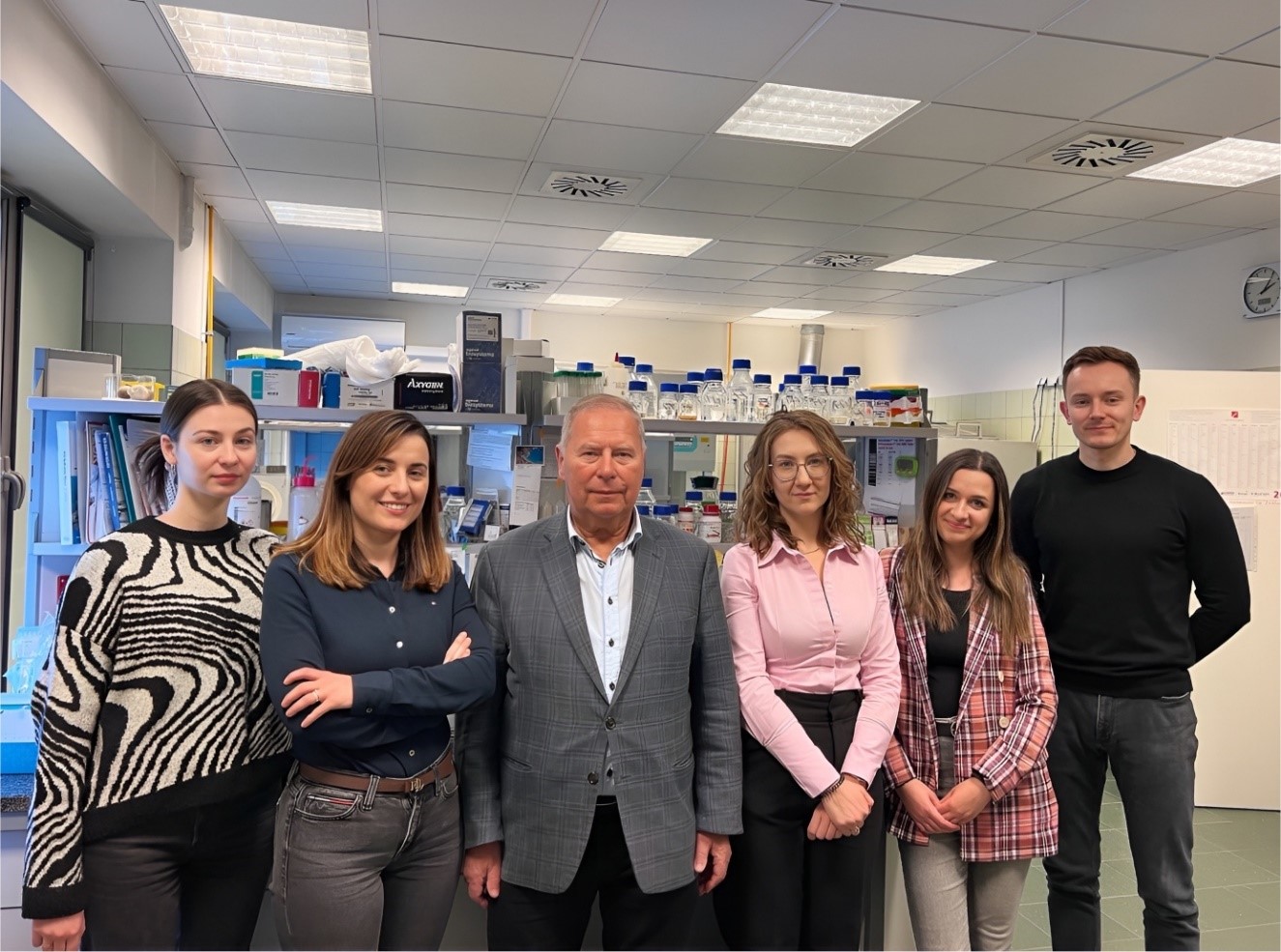
Aksyniia Tsaruk, Justyna Ruchala, Andriy Sybirnyy, Kamila Filip, Alicja Najdecka, Dominik Wojdyła
Research
Our research group interests are divided into several key areas:
1. Genetic and Regulatory Basis of Pentose Sugar Metabolism in Yeasts
The group has established a strong research axis focused on the molecular genetics and regulatory networks controlling pentose sugar metabolism and alcoholic fermentation in natural, thermotolerant yeasts.
-
Transcriptional regulation of pentose fermentation: Demonstrated that the transcriptional activator Cat8 plays a key role in regulating xylose alcoholic fermentation in Ogataea (Hansenula) polymorpha, a model thermotolerant yeast.
-
Enhanced fermentation capacity: Metabolic engineering and classical selection approaches generated yeast strains with significantly elevated ethanol production from xylose compared to wild-type strains.
-
Physiological characterization of pentose metabolism: Extensive studies detailed the connection between pentose uptake, central carbon flux, and ethanol yields under high-temperature fermentation conditions (approx. 45–50 °C).
2. Interplay Between Organelle Function and Metabolic Pathways
A key contribution of the group lies in revealing the roles of cellular organelles and specific metabolic enzymes in supporting complex metabolic behaviors in yeasts.
-
Peroxisomal enzymes in alcoholic fermentation: Identified that peroxisomal transketolase and transaldolase enzymes are essential for efficient xylose alcoholic fermentation in O. polymorpha.
-
Integration of organelle biology with central metabolism: This work demonstrated that intracellular organelle pathways integrate with pentose catabolism, challenging the traditional view of strictly cytosolic fermentation pathways.
This theme positions organelle function as a crucial determinant of metabolic flexibility in eukaryotic microbes.
3. Advanced Metabolic Engineering for Expanded Substrate Utilization
The group has also advanced engineering of yeast metabolism for expanded substrate range and co-utilization strategies.
-
Cellodextrin and mixed sugar utilization: Development and characterization of recombinant O. polymorpha strains capable of fermenting mixed lignocellulosic sugars including xylose, cellobiose, and glucose under thermotolerant conditions.
-
Synthetic biology approaches: Application of heterologous expression of transporter and metabolic enzyme genes (e.g., cellobiose transporters and β-glucosidases) to expand natural substrate scope.
These studies bridge fundamental metabolic biology with strategies for yeast strain diversification.
4. Biosynthesis and Regulation of Flavin Compounds
A distinctive research direction concerns flavin biosynthesis pathways and their genetic and metabolic regulation in yeasts, including the construction of strains overproducing vitamins and selected bioactive flavin derivatives.
-
Riboflavin homeostasis: Investigations into the regulation of riboflavin biosynthesis and flavin cofactor balance in microbial systems, contributing to a mechanistic understanding of vitamin metabolism and its integration with central cellular processes.
-
Engineering flavin overproducers: Construction and characterization of yeast strains with elevated production of riboflavin and related flavins, providing experimental systems for studying regulation, cellular tolerance, and metabolic constraints of flavin overaccumulation.
-
Flavin analogues and roseoflavin biosynthesis: Development of yeast-based platforms for the biosynthesis of flavin analogues, including roseoflavin, enabling analysis of biosynthetic pathways, cellular responses to flavin-derived stress, and regulation of bioactive flavin compounds in a eukaryotic context.
This research line integrates molecular genetics, metabolic regulation, and quantitative biochemical analysis, linking fundamental studies of flavin metabolism with controlled pathway modification in eukaryotic hosts.
5. Genetic and Physiological Control of Lactic Acid Fermentation in Yeasts
The group investigates fundamental mechanisms governing lactic acid synthesis and carbon flux partitioning in eukaryotic microorganisms, addressing key gaps in understanding organic acid metabolism in yeasts.
-
Native lactic acid producers: Comprehensive physiological characterization of Lachancea thermotolerans as the only known yeast naturally producing lactic acid alongside ethanol, including kinetics of lactate formation and regulation of carbon allocation.
-
Recombinant thermotolerant systems: Construction and analysis of Ogataea polymorpha strains expressing heterologous lactate dehydrogenases, enabling lactic acid production at elevated temperatures (up to 45 °C).
-
Regulatory determinants of pyruvate partitioning: Identification of genetic and environmental factors controlling the metabolic switch between ethanol and lactic acid synthesis, including aeration, redox balance, and transcriptional regulation.
-
Positive selection strategies: Development of original selection methods for isolating lactic-acid-overproducing mutants without prior genetic modification, providing a tool to dissect regulatory constraints of lactic acid biosynthesis.
This research establishes yeast systems as models for studying eukaryotic lactic acid metabolism, a field previously dominated by bacterial paradigms.
6. Metabolic Potential of Environmental and Non-Model Yeasts
A distinct research direction of the group focuses on functionally unexplored yeast biodiversity and its metabolic potential.
-
Insect-associated yeasts: Metagenomic and culture-based characterization of yeast communities associated with detritivorous insects, revealing taxa adapted to nutrient-poor, stress-rich environments.
-
Functional metabolic profiling: Identification of enzymatic activities related to polymer degradation, lipid synthesis, riboflavin production, and stress tolerance in environmental yeast isolates.
-
Ecological adaptation and metabolic flexibility: Linking environmental niche specialization with metabolic plasticity and regulatory capacity in non-model yeast species.
-
Foundations for future yeast models: Establishment of novel yeast strains as experimental systems for studying metabolism beyond classical laboratory organisms.
This line of research integrates microbial ecology with yeast metabolic biology, expanding the conceptual and organismal scope of fungal biotechnology.
Key Outputs & Scientific Impac
-
Conceptual Contributions: Identification of genetic regulators and metabolic architectures governing pentose and organic acid metabolism in yeasts.
-
Methodological Advances: Development of selection strategies, engineered yeast platforms, and metabolic analysis frameworks.
Selected 5 publications (2020–2025)
-
Ruchala J, Kurylenko OO, Dmytruk KV, Sibirny AA. Construction of advanced producers of first- and second-generation ethanol in Saccharomyces cerevisiae and selected species of non-conventional yeasts (Scheffersomyces stipitis, Ogataea polymorpha). J Ind Microbiol Biotechnol. 2020 Jan;47(1):109-132. doi: 10.1007/s10295-019-02242-x.
-
Dmytruk KV, Ruchala J, Fayura LR, Chrzanowski G, Dmytruk OV, Tsyrulnyk AO, Andreieva YA, Fedorovych DV, Motyka OI, Mattanovich D, Marx H, Sibirny AA. Efficient production of bacterial antibiotics aminoriboflavin and roseoflavin in eukaryotic microorganisms, yeasts. Microb Cell Fact. 2023 Jul 20;22(1):132. doi: 10.1186/s12934-023-02129-8.
-
Vasylyshyn R, Dmytruk O, Sybirnyy A, Ruchała J. Engineering of Ogataea polymorpha strains with ability for high-temperature alcoholic fermentation of cellobiose. FEMS Yeast Res. 2024 Jan 9;24:foae007. doi: 10.1093/femsyr/foae007.
-
Dzanaeva LS, Wojdyła D, Fedorovych DV, Ruchala J, Dmytruk KV, Sibirny AA. Riboflavin overproduction on lignocellulose hydrolysate by the engineered yeast Candida famata. FEMS Yeast Res. 2024 Jan 9;24:foae020. doi: 10.1093/femsyr/foae020.
-
Vasylyshyn R, Ruchala J, Dmytruk K, Sibirny A. Positive selection of efficient ethanol producers from xylose at 45 °C in the yeast Ogataea polymorpha. Sci Rep. 2025 Jul 22;15(1):26530. doi: 10.1038/s41598-025-12204-2.
Projects
-
Genetic control of pentose (D-xylose, L-arabinose) metabolism and alcoholic fermentation in the thermotolerant yeast Ogataea polymorpha, No., 2020/37/B/NZ1/02232, National Science Center, PLN 1 669 200, OPUS 2021-2024
-
Construction and properties of the recombinant yeast strains producing bacterial antibiotics roseoflavin and aminoriboflavin, No., 2021/41/B/NZ1/01224, National Science Center, PLN 1 365 100, OPUS 2022 – 2027
-
Construction of Candida famata flavinogenic yeast strains with improved ability to produce riboflavin in medium with lignocellulose hydrolysates, No. 2022/49/N/NZ1/01040 , National Science Center, PLN 197 640, PRELUDIUM 2024 - 2027
-
Genetic control of lignocellulosic sugar transport and metabolism during alcoholic fermentation of the thermotolerant yeast Ogataea polymorpha, No. 1232295, Horizon Europa, MSCA4Ukraine, EUR 156009.98, 2023 – 2025
Patents
-
PL247297 Method for obtaining bioactive nonwoven fabric for use in anticancer dressing material
-
PL244137 Method of obtaining yeast ethanol producers from xylose from thermotolerant Ogataea polymorpha yeast
-
PL244546 The non-conventional yeast strain Aureobasidium pullulans URC2 capable of efficient linoleic acid production in standard YPD medium
-
PL247951 Method of producing riboflavin in media with lignocellulose hydrolysates using the flavinogenic yeast Candida famata
-
PL 246658 A new strain of Candida famata BCRP yeast capable of overproducing riboflavin, the use of the yeast Candida famata BCRP for the production of riboflavin and method of producing riboflavin
Scientific collaboration
-
Institute of Cell Biology, National Academy of Sciences of Ukraine (Lviv, Ukraine)
-
Imperial College London (London, United Kingdom)
-
University of Southampton (Southampton, United Kingdom)
-
Australian National University (Camberra, Australia)