Group of The Interdisciplinary Centre For Preclinical And Clinical Research
Director of the Center

Anna received her PhD from the Institute of Electrical Engineering in 2006. She completed her habilitation at the Warsaw University of Technology in 2019. In 2023, she received the title of professor in the field of agricultural sciences, specializing in animal husbandry and fisheries. Her research interests focus on bioelectromagnetism - the effects of electromagnetic fields on animals - and the use of animal models in scientific research.
Members of research group
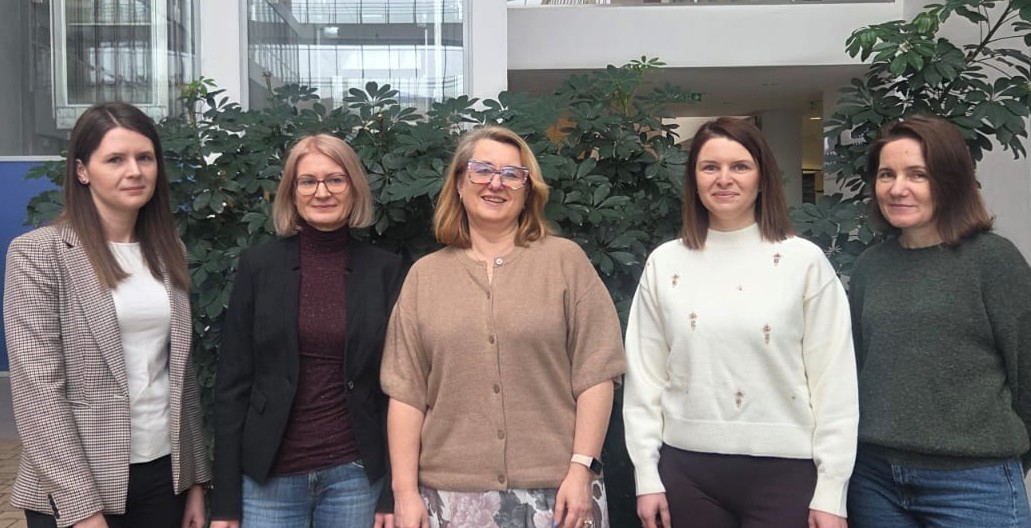
Gabriela Betlej, Katarzyna Kozioł, Anna Koziorowska, Iwona Rzeszutek, Maria Romerowicz-Misielak
The Interdisciplinary Centre for Preclinical and Clinical Research
The Interdisciplinary Center for Preclinical and Clinical Research was established in 2021 and has been operating within the Faculty of Biotechnology since October 1, 2024. The infrastructure of the Interdisciplinary Center for Preclinical and Clinical Research enables multifaceted and comprehensive research through the implementation of research tasks and commissioned projects in various fields of medicine, biotechnology, and materials science. The Center's research infrastructure can be used by its employees and external entities to conduct scientific and development work. The Center's infrastructure meets the needs of research using large animals (pigs), as well as small rodents such as mice, rats, and rabbits, and in vitro cell and tissue cultures. The center is equipped with experimental/diagnostic/surgical facilities for animals, rooms for mice, rats, and rabbits, as well as specialized diagnostic and research equipment and laboratory facilities. The current infrastructure enables research to be conducted using active ingredients that can potentially be used in regenerative medicine, as well as molecules with potential applications in theranostics. Mouse and rat models enable, for example, testing of new drugs, providing data on dose, drug biodistribution, route of administration and excretion, efficacy in clinical indications, and toxicity. The ability to use large laboratory animals (pigs) for research, which are physiologically and anatomically similar to humans and share many common features in the structure and function of various organ systems, allows for research in emergency medicine and the training of medical personnel. The similar genetic profile of pigs to humans allows for the development and testing of targeted therapies, as well as limiting the negative effects of treatment. This allows for testing therapies for lifestyle diseases such as cancer, hypertension, obesity, and diabetes. Furthermore, because pigs, like humans, experience similar protein abnormalities and dysfunctions that cause diseases such as Parkinson's and Alzheimer's, pigs are a good research model for these diseases. Based on its existing infrastructure, the Centre's goal is to provide services and scientific cooperation, including individual assistance in planning experiments, conducting a wide range of research using animal models (in situ, in vivo) and cell-tissue models (in vitro), as well as advanced analysis.
Research conducted using an animal model requires approval from the Local Ethics Committee. The following approvals were obtained by the Center:
-
Safety assessment of the pulmonary vein isolation procedure using electroporation in a domestic pig model;
-
Development of the composition of a new medicinal product dedicated to people who are trying to lose weight, are active and want to increase the effectiveness of their exercises;
-
Methods of maintaining hemostasis in conditions of massive hemorrhage in a domestic pig model;
-
Risk assessment of the use of the REBOA technique in emergency medical services using a domestic pig model;
-
Collection of ovaries, uterus and adrenal glands from piglets fed with mother's milk or milk replacer in order to assess the influence of biologically active compounds contained in mother's milk on the development and function of these organs;
-
Collection of ovaries, uterus and adrenal glands from piglets fed with mother's milk or milk replacer in order to assess the influence of biologically active compounds contained in mother's milk on the development and function of these organs;
-
Safety assessment of an innovative umbilical catheter using a domestic pig model;
-
Application of photodynamic therapy in the treatment of coronary atherosclerosis in a domestic pig model;
-
Blood collection from a domestic pig for pilot hemocompatibility studies.
Research
In addition to working for external stakeholders, the Centre's team is required to conduct their own research.
Team’s scientific activities include:
Determination of the impact of extremely low-frequency electromagnetic fields on living organisms using in vitro and in vivo models. Especially, normal and cancer cell lines are used to examine the effect of electromagnetic fields (EMF) on the molecular details of different pathways regulating proliferation, apoptosis, oxidative stress, DNA damage, and repair, as well as epigenetic modifications. The research also includes the impact of fields on tissue cultures using a wild animal model (European roe deer). The analysis included tissues from the reproductive systems of male and female roe deer, which are most susceptible to the negative effects of field exposure, not only on the tissues but also on their offspring. The effects on the other tissues examined (adrenal glands, liver, and heart) did not reveal any significant changes.
The research activities in the Center also focus on interdisciplinary studies in biochemistry, toxicology, and molecular biology, with a particular emphasis on the mechanisms regulating the circadian clock. There is analyzed the influence of gasotransmitters, such as hydrogen sulfide (H2S) and carbon monoxide (CO), on the stability of clock gene oscillations (Per2, nPAS2) and their role in maintaining organismal homeostasis. There are conducted the researcg in the field of oncochronobiology, which examines the influence of environmental factors on cell functioning and the deregulation of biological rhythms in cancer processes.
There are conducted the study on the mechanisms regulating spermatogenesis and sperm maturation in the epididymis using the European roe deer model. This species exhibits marked seasonality in testicular spermatogenesis, which may reflect stages of early puberty (onset of spermatogenesis), optimal sexual maturity (highest spermatogenic activity), and the onset of aging (reduced spermatogenic activity). This provides an ideal in vivo model (without artificial intervention) for studying the mechanisms influencing spermatogenic activity in various physiological states of the male gonad. Changes in spermatogenesis in male roe deer occur in response to the changing profile of melatonin biosynthesis and secretion from the pineal gland into the peripheral blood, which is dependent on the changing length of day and night throughout the year. The presence of melatonin receptors (MT1 and MT2) in Leydig cells, Sertoli cells, germ cells, and epididymal epithelial cells has been demonstrated, as well as their stimulating effect on spermatogenesis and sperm maturation. The expression of key melatonin biosynthetic enzymes (AANAT and ASMT) in testicular and epididymal cells, as an additional, extrapineal/local source of melatonin, as well as the expression of autophagy markers (LC3A, LC3B, and ATG7) in various physiological states of the male roe deer testes, are also being studied, along with the role of this process in the regulation of spermatogenic activity.
The Interdisciplinary Centre for Preclinical and Clinical Research has established collaborations with international research institutions. The researchers are focused on two main research areas. The first is an interdisciplinary collaboration with chemistry group from the University of Würzburg, aimed at the development of novel small-molecule therapeutics with potential anticancer, regenerative, and theranostic activities. The second, conducted in collaboration with a research group from the University of Bari, focuses on studies of intercellular communication, which may play a crucial role during chemotherapy and in the development of treatment resistance.
The Centre is engaged in an R&D collaboration aimed at identifying compounds with potential senolytic activity in human fibroblast cells, which may subsequently be utilized in the development of anti-aging formulations. In addition, our team collaborates with a company specializing in stem cell production, whose products will be evaluated for potential applications in regenerative medicine.
Selected 5 publications (2023-2025)
-
Betlej Gabriela Maria, Bator Ewelina, Koziorowska Anna, Koziorowski Marek, Rzeszutek Iwona, The In Vitro Enhancement of Retinal Cell Viability via m6A and m5C RNA Methylation-Mediated Changes in the Levels of Heme Oxygenase (HO-1) and DNA Damage Repair Molecules Using a 50 Hz Sinusoidal Electromagnetic Field (EMF), International Journal of Molecular Sciences, 2024: Vol. 25, iss. 24, id. art. 136026, DOI: 10.3390/ijms252413606
-
Deręgowska Anna, Tomaszek N., Cuch P., Kozioł Katarzyna, Kaniuka O., Sabadashka M., Bandura Yu., Sybirna N, Glucotoxicity is mediated by cytoplasmic distribution of RAP1 in pancreatic β-cells, Archives of Biochemistry and Biophysics, 2024 : Vol. 755, id. art. 109982, doi:10.1016/j.abb.2024.109982
-
Wojtaszek Małgorzata, Grzesiak Małgorzata, Pawlikowska Olga, Koziorowska Anna, Koziorowski Marek, Słomczyńska Maria, Knapczyk-Stwora Katarzyna, Oxidative stress, apoptosis and proliferation in uterus of piglets fed by sow or formula after ex vivo endocrine compound exposure, Scientific Reports, 2025: Vol. 15,iss.1, id. art. 27386, DOI: 10.1038/s41598-025-09895-y
-
Rzeszutek Iwona, Nowak-Król Agnieszka, HuR-Targeted Small-Molecule Inhibitors - Beneficial Impact in Cancer Therapy, Journal of Medicinal Chemistry, 2025: Vol. 68, iss. 21, p. 22009-22032, DOI: 10.1021/acs.jmedchem.5c01487
-
Lyu Liping, Ding Bijia, Fu Jinyu, Rzeszutek Iwona, Swart Estienne C., Nowacki Mariusz, Gao Feng, Soma-derived 30- nt small RNAs are coupled with chromosome breakage and precisely target nontransposon DNA against elimination in Euplotes vannus, Science Advances, 2025: Vol. 11, iss. 41, id. art. eadx3690, DOI: 10.1126/sciadv.adx3690
Scientific collaboration
-
University of Würzburg, Institute for sustainable chemistry & catalysis with boron - ICB, Germany
-
University of Bari, Italy
-
Lviv National University of Veterinary Medicine and Biotechnology, Faculty of Biotechnology, Ukraine
-
Jagiellonian University, Faculty of Biology, Poland
-
University of Warmia and Mazury, Faculty of Animal Bioengineering, Olsztyn, Poland
-
Medical University of Gdańsk, Faculty of Medicine, Poland
-
Podkarpackie Innovation Center, Poland
