Group of Food Biotechnology
Team leader
Prof. Grzegorz Chrzanowski; gchrzanowski@ur.edu.pl, ORCID 0000-0001-9836-1514
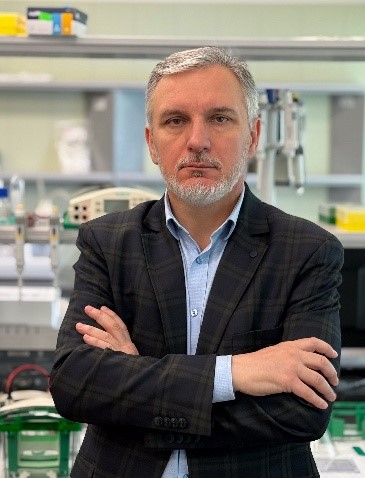
Professor Grzegorz Chrzanowski is an academic and researcher in the field of Natural Sciences, specializing in the interdisciplinary area of Biology, Agriculture, and Biotechnology, with a primary focus on the biochemistry of secondary metabolites, their biosynthesis, and role in biological systems.
Professor Chrzanowski graduated in chemistry from the University of Siedlce in 1994, received a PhD in agricultural sciences in 2001, and was habilitated in agricultural sciences at the University of Siedlce in 2013. Since 2018, he has been working at the Faculty of Biotechnology at the University of Rzeszow, and in 2024, the President of the Republic of Poland awarded him the title of Full Professor in biological sciences.
Members of research group
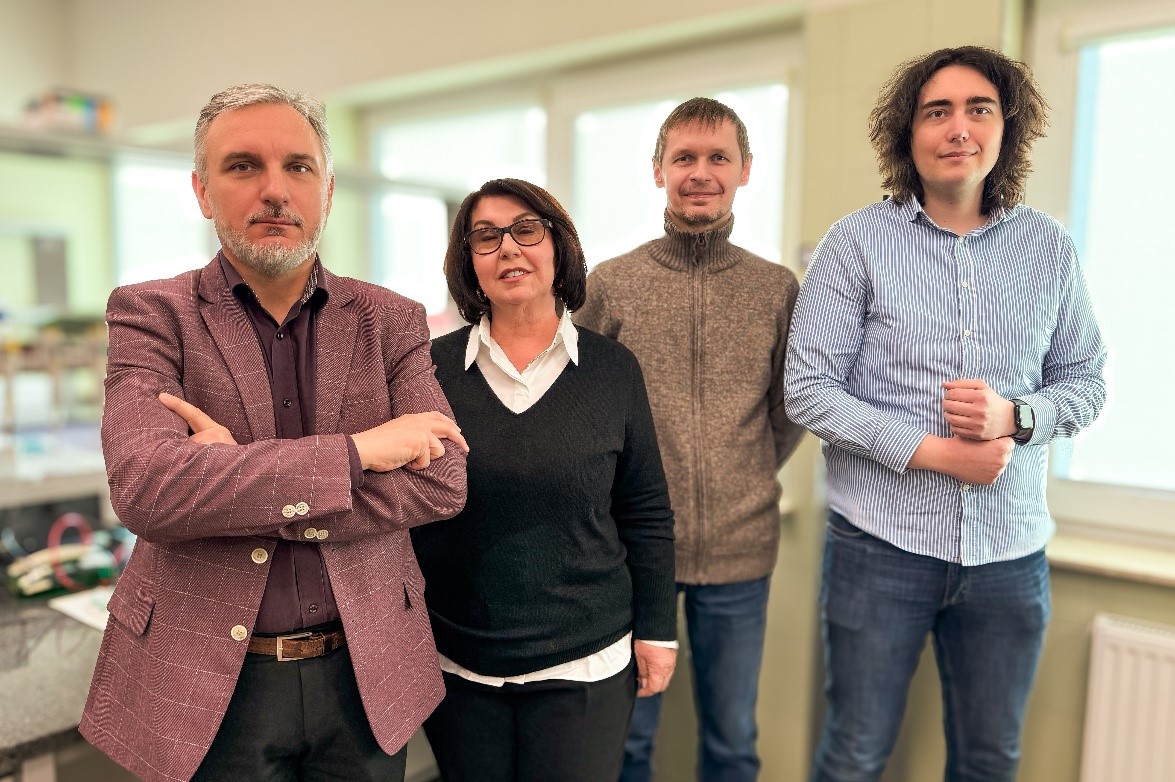
Grzegorz Chrzanowski, Nataliia Sybirna, Daniel Broda, Jan Cichoński
Research
Our research is mostly focused on the biosynthesis of secondary metabolites in plant and green microalgae cells under biotic and abiotic stress conditions, as well as their activity against insects and as antimicrobial agents against Candida species.
For the identification of plant and yeast metabolites, we use chromatographic systems coupled with mass spectrometry (UPLC-MS/MS) and/or spectrophotometric and fluorescence detectors (UPLC-UV-VIS/FLD). While the LC-MS/MS technique, following electrophoresis and enzymatic digestion, we use to analyse the proteomic profile.
-
Secondary metabolites, their biosynthesis, and activity. Secondary compounds are a widespread group of metabolites produced by plants. They are not involved in basic plant metabolism, but play an important role in response to different stressors and are produced via specialised metabolic pathways, often through cross-talk signalling. Due to their chemical structures, polyphenolic compounds, particularly phenylpropanoid acids and flavonoids, are strong antioxidant agents, thus they are able to decrease the level of reactive oxygen species. Flavonoids also have a high tendency to chelate transition metals, such as iron and copper, and suppress the Fenton reaction. Therefore, our research focuses on the biosynthesis, identification, and activity of phenolic metabolites. In green microalgae, we have found an increase in PAL activity and biosynthesis of phenolic compounds after treatment with methyl salicylate. Moreover, the application of salicylates led to the accumulation of monounsaturated fatty acids rather than saturated ones.On the other hand, phenolic acids and flavonoids produced in high concentrations in plants infested with aphids act as antifeedants and reduce insect development. In contrast, at low concentrations, they scavenge reactive oxygen species and protect plants against the oxidative stress generated by feeding aphids.
-
Activity of essential oils. Essential oils (EOs) are a mixture of secondary plant metabolites composed mainly of monoterpenes, sesquiterpenes, and their oxygenated derivatives. They are abundantly found in several aromatic plant families, among which Lamiaceae, Apiaceae, and Asteraceae have received considerable attention. Essential oils and extracts obtained from these plants have been shown to possess a broad spectrum of biological activities.Bioassays demonstrated that the studied EOs inhibited the settling of Rhopalosiphum padi and Myzus persicae, and interfered with the aphid probing behaviour by reducing the total probing time and duration of phloem sap ingestion. The obtained results showed that treatment with EOs affected trypsin and pepsin activity. Moreover, our results suggest induction of oxidative stress in the aphid body as a result of treatment with EOs, as well as nervous system and signal transmission disorder by induction of cholinesterase (AChE) activity and inhibition of NA+/K+ ATP-ase.
-
The effect of secondary metabolites and nanoparticles on biomedical systems. We have demonstrated that grape pomace extract containing polyphenolic compounds exerts coordinated effects on carbohydrate and lipid metabolism, antioxidant enzyme activity, and oxidative damage markers, supporting its distinctive multitarget profile with potent hypoglycemic, antidyslipidemic, and antioxidant actions.According to our earlier research, which has shown significant inhibition of aphid development and disruption of their enzymatic systems in response to plant secondary compounds, we currently focus on examining the activity of essential oils and magnetic nanoparticles against Candida spp. We have found a strong antifungal activity after their treatment. Moreover, we are interested in the analysis of proteomic profile changes in response to essential oils and nanoparticle treatment.
Selected 5 publications (2023-2025)
-
Brodyak I, Moroz A, Bernacka K, Kucharska AZ, Sybirna N. Alleviation of hyperglycaemia and oxidative stress by fruit extracts of different cultivars of the cornelian cherry (Cornus mas L. and Cornus mas × Cornus officinalis) in rats with diabetes mellitus. Food Funct. 2025 Mar 3;16(5):2136-2155. doi: 10.1039/d4fo05426a.
-
Tomaszewska A, Kulpa-Greszta M, Hryców O, Niemczyk K, Wojnarowska-Nowak R, Broda D, Pazik R. Biofunctionalization of Magneto-Plasmonic Fe3O4@SiO2-NH2-Au Heterostructures with the Cellulase from Trichoderma reesei. Molecules. 2025 Feb 6;30(3):756. doi: 10.3390/molecules30030756.
-
Sabadashka M, Chala D, Chrzanowski G, Cichoński J, Sybirna N. Beneficial Effects of Grape Pomace Extract on Hyperglycemia, Dyslipidemia, and Oxidative Stress in Experimental Diabetes Mellitus. Molecules. 2025 Oct 25;30(21):4183. doi: 10.3390/molecules30214183.
-
Górska-Drabik E, Golan K, Sempruch C, Chrzanowski G, Dybowski MP, Poniewozik M. Chemical Composition and Toxicity of Achillea millefolium L. Essential Oil Against Acrobasis advenella (Lepidoptera, Pyralidae) Under Laboratory Conditions. Molecules. 2025 Apr 26;30(9):1927. doi: 10.3390/molecules30091927.
-
Chrzanowski G, Pasternak G, Aebisher D, Dynarowicz K, Myśliwiec A, Bartusik-Aebisher D, Sosna B, Cieślar G, Kawczyk-Krupka A, Filip R. An Analysis of the Content of Metalloproteinases in the Intestinal Wall of Patients with Crohn's Disease. Life (Basel). 2023 Oct 5;13(10):2013. doi: 10.3390/life13102013.
Patents
-
PL244913: New strain of microalgae Parachlorella kessleri DB1 capable of efficient production of essential fatty acids and beta-glucans.
-
PL244546: The non-conventional yeast strain Aureobasidium pullulans URC2 capable of efficient linoleic acid production in standard YPD medium.
Scientific collaboration
-
Swedish University of Agricultural Sciences, Uppsala, Sweden
-
AGH University Cracow, Krakow, Poland
-
University of Siedlce, Siedlce, Poland
-
Ivan Franko National University of Lviv, Lviv, Ukraine
-
Slovak University of Agriculture, Nitra, Slovakia
-
University of Life Sciences in Lublin, Lublin, Poland
