Group of Functional Nanomaterials
Team leader
Prof. Robert Pązik, rpazik@ur.edu.pl, ORCID: 0000-0002-4662-6688
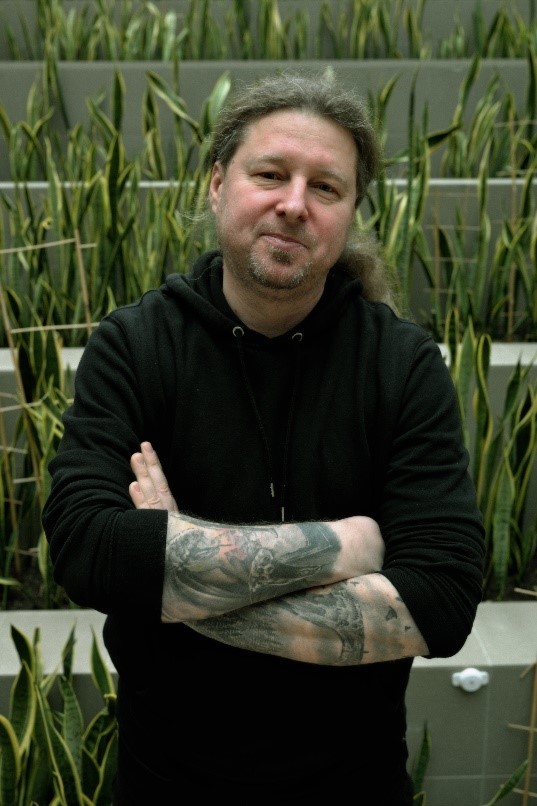
He received his M.Sc. in 2002 at the University of Opole, Faculty of Mathematics, Physics and Chemistry, Opole, Poland, Ph.D. in 2008 at the Włodzimierz Trzebiatowski Institute of Low Temperatures and Structure Research, Polish Academy of Sciences (ILTSR, PAS), Wrocław, Poland, Habilitation (D.Sc.) in 2016 at the ILTSR, PAS, and became a Professor in Chemical Sciences in 2025. He is a laureate of the Janikowa award (2003) for the best master's thesis funded by the Polish Chemical Society, holder of the Young Scientist Scholarship (2007) of the Foundation for Polish Science (FNP), and recipient of the BGF (2011) and SSHN (2022) stipends financed by the French Government. He carried out his postdoctoral training at the SLU, Uppsala, Sweden (2008-2010), working together with Professor Vadim G. Kessler on, predominantly, non-hydrolytic approaches toward mixed metal oxides with functional properties. His scientific work focuses on the synthesis and characterization of functional metal oxide nanomaterials, including luminescent and magnetic nanoparticles, complex heterostructures, and composite materials.
Members of research group
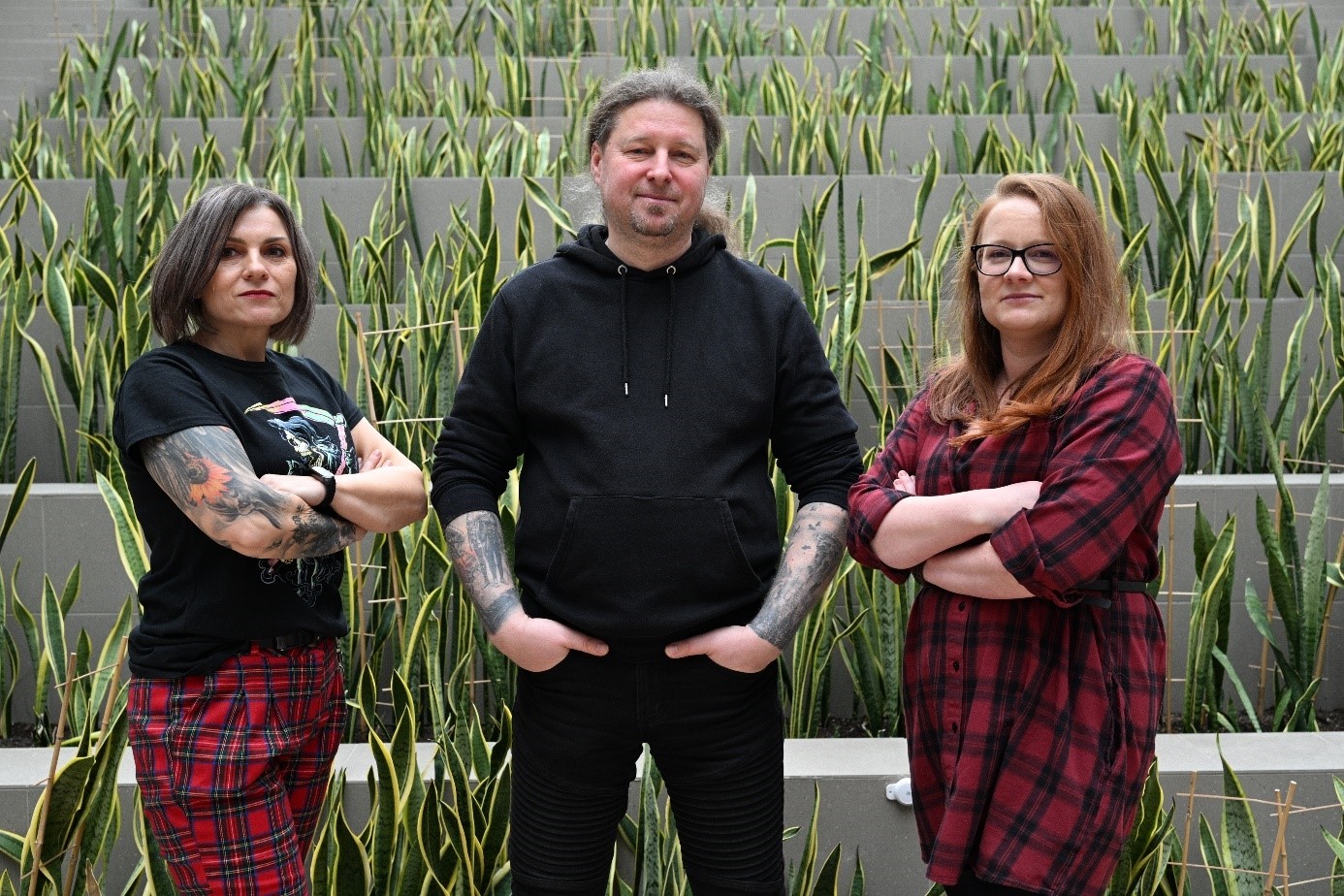
Anna Tomaszewska, Robert Pązik, Magdalena Kulpa-Greszta
Research
Our research group interests are divided into several key areas involving interdisciplinary approach:
-
Rational design of functional magnetic and hybrid materials capable of efficient, contactless energy conversion under the action of external stimuli such as alternating magnetic field (AMF) and near-infrared light (NIR) to understand how material architecture, interphase interactions, and physicochemical constraints govern heat generation mechanisms, and how these effects can be tailored for bio-relevant, sustainable, and application-oriented platforms.
-
Development of different classes of nanomaterials with precisely controlled composition, morphology, and interphase structure through combination of several synthetic strategies i.e. heat-up, hot-injection, flow-injection, seed-mediated growth and etc. toward core-, multi-shell nanostructures that combine physicochemical properties.
-
Engineering of biorelevant hybrid materials including highly porous, lightweight composite scaffold by combining inorganic and organic compounds (synthetic or natural origin), smart composite materials with fully biodegradable polymers, organic-inorganic functional hybrids as well as nano and submicron scale organic-inorganic functional spheres with conductive polymers such as PRHD.
-
Sustainable materials for new class of sorbents, smart, packaging magneto-polymeric foils facilitating waste management.
Since 2017 group pursues a coherent research directions that connects fundamental nanomaterials design with application-driven functional platforms strengthening the scientific basis for the development of smart, stimuli-responsive materials and to open new pathways toward their practical implementation in materials science, biomedicine, sustainable materials engineering, and modern functional technologies.
Selected 5 publications (2023-2025)
-
Zachanowicz E., Tomaszewska A., Kulpa-Greszta M., Pilloni C., Zákutná D., Romerowicz-Misielak M., and Pazik R., Biodegradable PBAT@CoFe2O4 Foils as Magnetically Active Photothermal Materials for Smart Surface Heating. Nanoscale 17, 25105 (2025). https://doi.org/10.1039/d5nr02710a
-
Zachanowicz E., Tomaszewska A., Kulpa-Greszta M., Krzemiński P., Nedelec J.M., Zákutná D., Hricov Š., Nurzyńska A., Belcarz-Romaniuk A., and Pązik R., Triggered by Light and Magnetism: Smart Foam PLLA/HAP/Fe3O4 Scaffolds for Heat-Controlled Biomedical Applications. Journal of Materials Chemistry B 13, 9465 (2025). https://doi.org/10.1039/d5tb00998g
-
Rogalska, B. Cieniek, A. Tomaszewska, M. Kulpa-Greszta, P. Krzemiński, B. Zarychta, I. Stefaniuk, and R. Pązik, X and Q-band EMR study of ultrasmall Zn1-xMnxFe2O4 spinel nanoparticles fabricated under nonhydrolytic conditions. Dalton Transactions 54, 1935 (2025). https://doi.org/ 10.1039/d4dt02647k
-
Sikora-Dobrowolska B., Borodziuk V., Kulpa-Greszta M., Pązik R., Wojciechowski T., Sobczak K., Rybusiński J., Szczytko J., Kłopotowski L., Opto-magnetic nanoparticles with upconverting properties for optical imaging and photothermal therapies. Journal of Magnetism and Magnetic Materials 591, 171714 (2024). https://doi.org/10.1016/j.jmmm.2024.171714
-
Kulpa-Greszta M., Tomaszewska A., Dziedzic A., Pązik R., Temperature effects induced by NIR photo-stimulation within Ist and IInd optical biological windows of seed-mediated multi-shell nanoferrites. Dalton Transactions 52, 2580 (2023). https://doi.org/10.1039/D2DT04178B
Research Projects
-
Synergistic effect of alternating magnetic field and light conversion within Ist and IInd biological optical window on nanostructural ferrites for modern thermal therapies of neoplastic diseases, National Science Centre Poland (NCN), Opus 13 project no. 2017/25/B/ST5/00497, 2018-2023, Robert Pązik, principal investigator
-
Synthesis and physicochemical characterization of multishell ferrites, National Science Centre (NCN), Miniatura no. 2024/08/X/ST5/01349, Magdalena Kulpa-Greszta, principal investigator
-
Multifunctional foams for temperature stimulated regenerative processes of bone tissue, Subcarpathian Innovation Centre, project no. N3_032, 2022, Robert Pązik, principal investigator
Scientific collaboration
-
Université Clermont Auvergne, Clermont Auvergne, Clermont-Ferrand, France
-
Charles University, Department of Inorganic Chemistry, Prague, Czech Republic.
-
Institut Laue-Langevin - The European Neutron Source, Grenoble, France.
-
SLU, Chemistry Department, Uppsala, Sweden.
-
Institute of Physics, Polish Academy of Sciences, Warszawa, Poland.
-
Wlodzimierz Trzebiatowski Institute of Low Temperature and Structure Research, Polish Academy of Sciences, Wrocław, Poland.
-
Adam Mickiewicz University, Faculty of Chemistry, Poznań, Poland.
-
Wrocław University of Science and Technology, Faculty of Chemistry, Wrocław, Poland.
-
University of Opole, Faculty of Chemistry, Opole, Poland.
-
Medical University of Lublin, Chair and Department of Biochemistry and Biotechnology, Lublin, Poland.
-
Medical University of Gdansk, Chair of Medicinal Chemistry, Gdansk, Poland.
