Group of Environmental Assessment And Monitoring
Team leader
Professor Idalia Kasprzyk, ikasprzyk@ur.edu.pl, ORCID 0000-0002-9392-678X
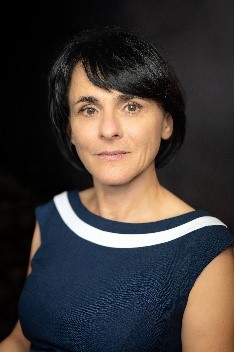
Professor Idalia Kasprzyk is a biologist and botanist specializing in aerobiology and plant sciences. She studied biology at the Jagiellonian University in Kraków, where she also completed her PhD in aerobiology. She obtained the title of Professor of Biological Sciences in 2020, following a formal procedure conducted at Adam Mickiewicz University in Poznań. Professor Kasprzyk has held several senior academic leadership positions including Dean of the College of Natural Sciences and Vice Rector of the College of Natural Sciences at the University of Rzeszów. In recognition of her outstanding scientific achievements in botany, she was awarded the prestigious Szafer Medal by Polish Botanical Society.
Members of research group
Research
The research group focuses on aerobiology, with particular emphasis on the monitoring and analysis of airborne biological particles. Since 1997, the team has conducted long-term studies on the concentrations of allergenic and pathogenic fungal spores and pollen grains in south-eastern Poland, which has allowed the elaboration of regional pollen and fungal spore calendars. Aerobiological investigations are carried out using volumetric
In recent years, the group has also implemented automated systems for real-time identification and quantification of airborne particles, including non-organic aerosols, using RAPID E+ technology. The research addresses the biology of pollen and fungal spores, their short- and long-distance dispersal, and the influence of environmental and meteorological parameters on aerobiological processes. A key area of interest is the development and application of innovative identification techniques, such as spectroscopy and cytometry, to improve the accuracy and efficiency of pollen grain analysis. In parallel, the group investigates air quality, with a particular focus on the chemical composition and oxidative potential of ultrafine particulate matter. Complementary to these activities, the group also conducts research on the ecology, taxonomy, and biogeography of terrestrial diatoms, with a particular emphasis on Europe and South-East Asia.
1. Aerobiology and long-distance transport of bioaerosols
This research stream focuses on the dynamics, seasonality, and short- and long-distance transport of airborne pollen and fungal spores. Particular attention is given to large-scale atmospheric transport events and their links with synoptic conditions, land use, and meteorological factors. The studies address both natural background levels and episodic events involving allergenic and pathogenic bioaerosols.
2. Air quality, chemical composition of aerosols, and oxidative potential
A major line of research concerns air quality, with an emphasis on the chemical composition of atmospheric aerosols and their oxidative potential, especially in fine and ultrafine particulate fractions. This includes investigations of free radicals, heavy metals, and pollution episodes such as Saharan dust intrusions, as well as the biological effects of air pollution on plants.
3. Vegetation–Atmosphere Interactions and Ecosystem Disservices
This research area examines interactions between vegetation and the atmosphere, including the role of pollen and canopy processes in element deposition, the transfer of heavy metals within plant systems, and the influence of land cover and landscape structure on biological and environmental processes. The group also explores ecosystem services and disservices, assessing how vegetation and land use contribute to or mitigate environmental risks and benefits.
4. Applied and Interdisciplinary Botany
The research applies botanical and aerobiological knowledge to practical challenges such as forensic botany, occupational and environmental health risks, and ecosystem management. It also explores the use of pollen grains as a basis for creating functional materials and their potential applications in green technologies. Furthermore, the group investigates how the achievements of palynology and aerobiology can contribute to the implementation of the United Nations Sustainable Development Goals (SDGs), integrating interdisciplinary approaches to develop sustainable solutions and mitigate ecological and societal impacts.
5. Taxonomy and Biogeography of diatoms
The research focuses on the ecology, taxonomy, and biogeography of terrestrial diatoms, from tropical regions of the world. A major research direction involves the analysis of diatom assemblages associated with unusual and extreme habitats, including mineral water springs and specific environments of the Polish Carpathians, where the occurrence of microendemic and extremophilic species is documented. The research interests also include the isolation of diatoms from various types of environments and the optimisation of culture conditions in laboratory settings.
Selected 5 publications (2023-2025)
-
Makuch-Pietraś I, Grabek-Lejko D, Górka A, Kasprzyk I. Antioxidant activities in relation to the transport of heavy metals from the soil to different parts of Betula pendula (Roth.). J Biol Eng. 2023;17(1):19. doi:10.1186/s13036-022-00322-8.
-
Verstraeten A, Bruffaerts N, Cristofolini F, et al. Effects of tree pollen on throughfall element fluxes in European forests. Biogeochemistry. 2023;165:311-325. doi:10.1007/s10533-023-01082-3.
-
Wójcik M, Kasprzyk I. Seasonality and intensity of airborne Boletus-type spores in relation to land use and weather pattern. IMA Fungus. 2023;14:26. doi:10.1186/s43008-023-00135-4.
-
Sofiev M, Palamarchuk J, Kouznetsov R, Abramidze T, Adams-Groom B, Antunes CM, et al. European pollen reanalysis, 1980–2022, for alder, birch, and olive. Sci Data. 2024;11(1):1082. doi:10.1038/s41597-024-03686-2.
-
Ortyl B, Kasprzyk I, Jadczyszyn J. Trends and drivers of land abandonment in Poland under Common Agricultural Policy. Land Use Policy. 2024;147:107353. doi:10.1016/j.landusepol.2024.107353.
Projects
-
Programme Regional Initiative of Excellence. Agreement No. RID/SP/0010/2024/1, Minister of Science of the Republic of Poland, prof. Idalia Kasprzyk – manager, PhD Katarzyna Kluska - coordinator
Scientific collaboration
-
Worcester University, UK
-
BioSense Institute University of Novi Sad, Serbia
-
University of Granada, Spain
-
Vilnius University, Lithuania
-
Finnish Meteorological Institute, Helsinki, Finland
-
Federal Office of Meteorology and Climatology MeteoSwiss, Zurich, Switzerland
-
Aristotle University of Thessaloniki, Greece
-
University of Cordoba, Cordoba, Spain
-
University of Latvia, Riga, Latvia
-
National Center for Public Health and Pharmacy, Budapest, Hungary
-
Airlangga University, Indonesia
-
University of Ss. Cyril and Methodius, Macedonia
-
Brawijaya University, Indonesia
-
University of Bologna, Italy
-
Saigon Univeristy, Vietnam
-
Univeristy of Colorado, USA
-
Kuthaya Dumlupinar University, Turkey
-
Adam Mickiewicz University in Poznań, Poznań, Poland
-
Jagiellonian University, Cracow, Poland
-
Wrocław University, Wrocław, Poland
-
Podkarpackie Innovation Center, Rzeszów, Poland
