News
Campus Without Borders – International Academic Exchange Day 2026
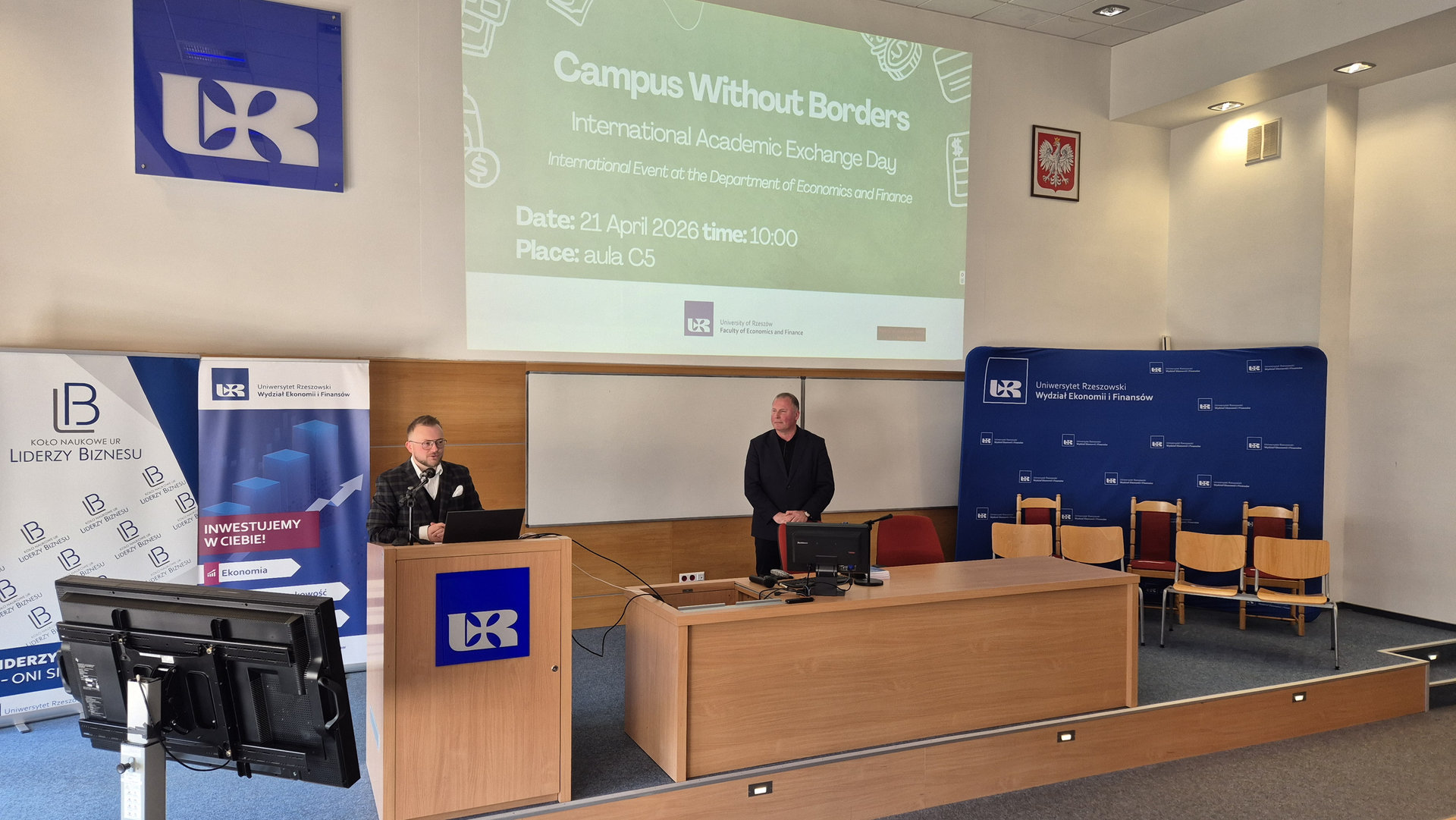
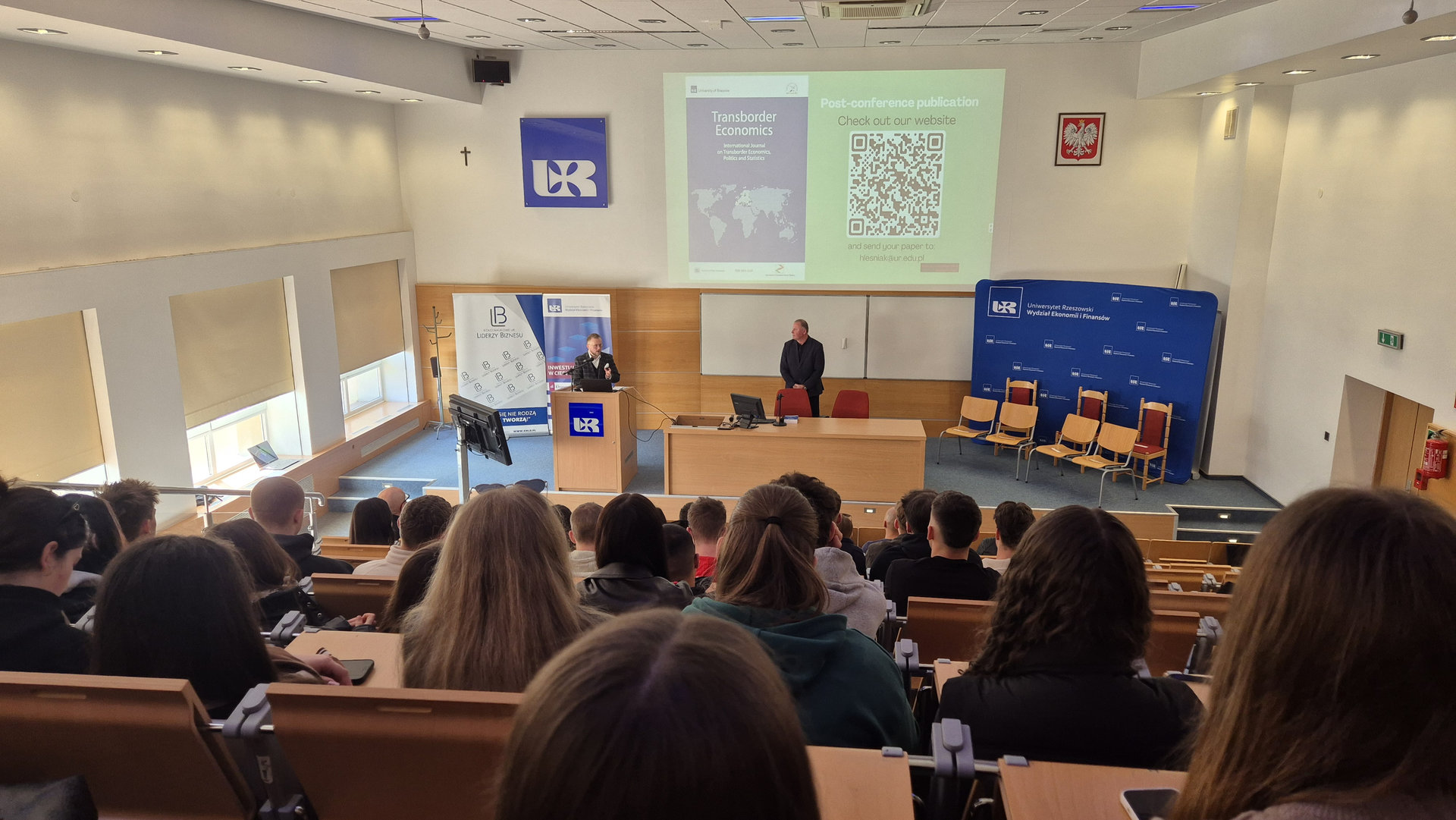
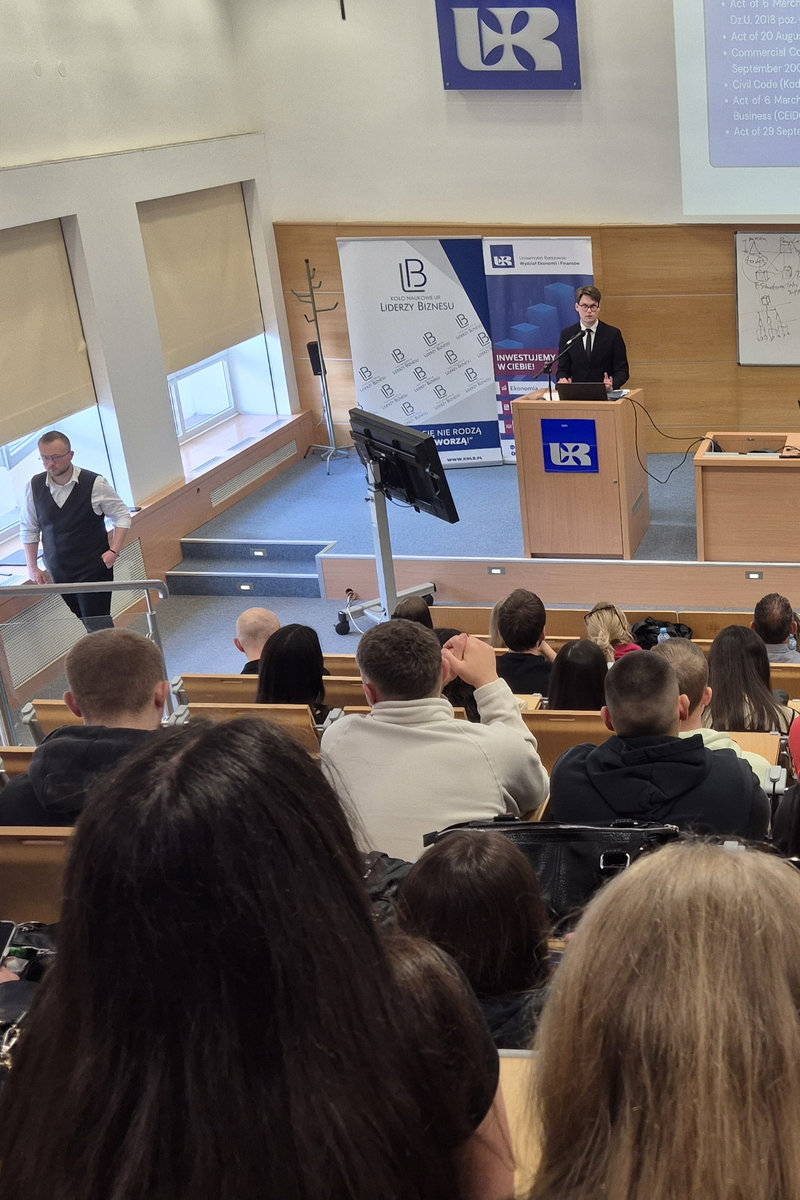
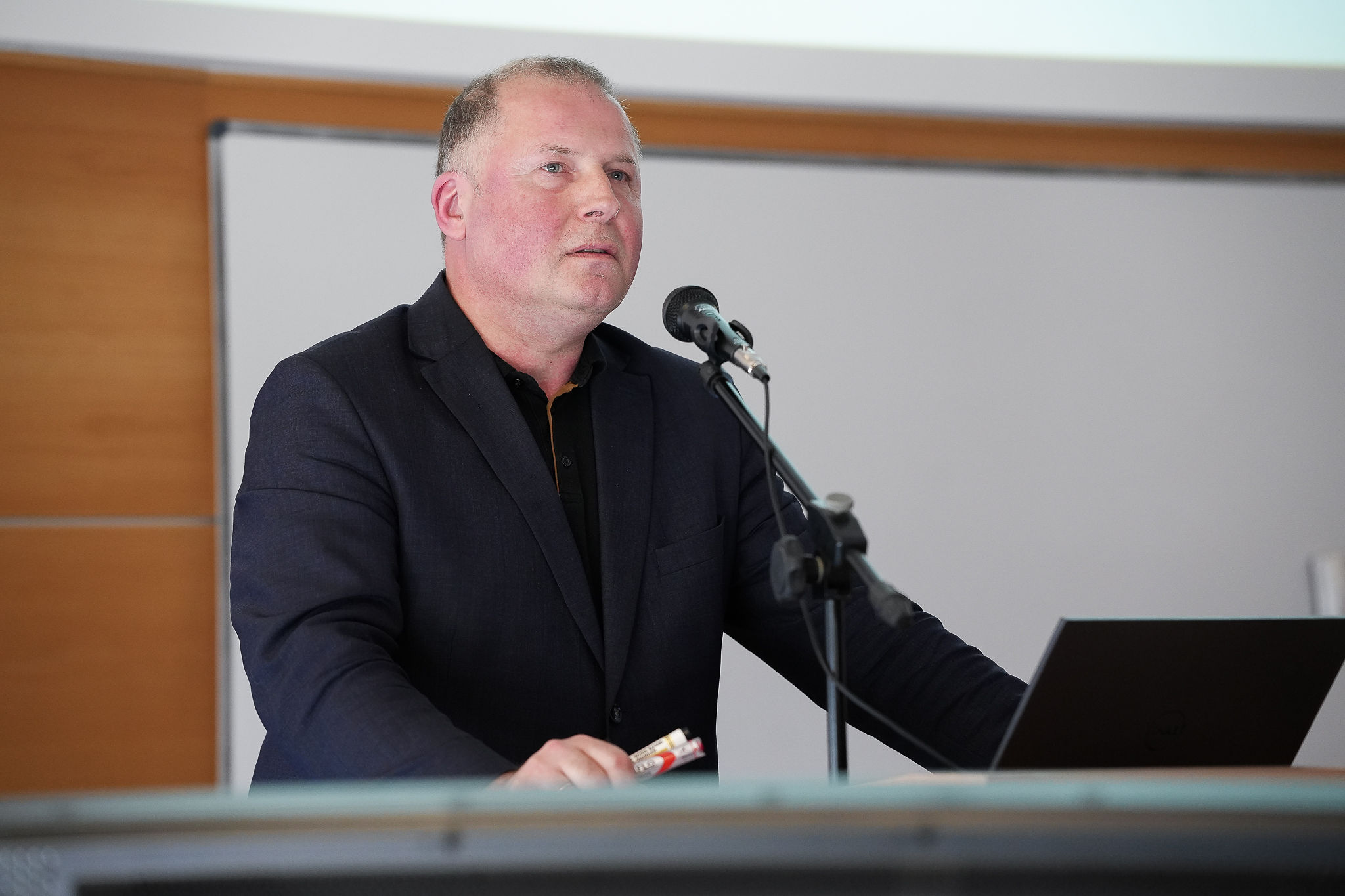
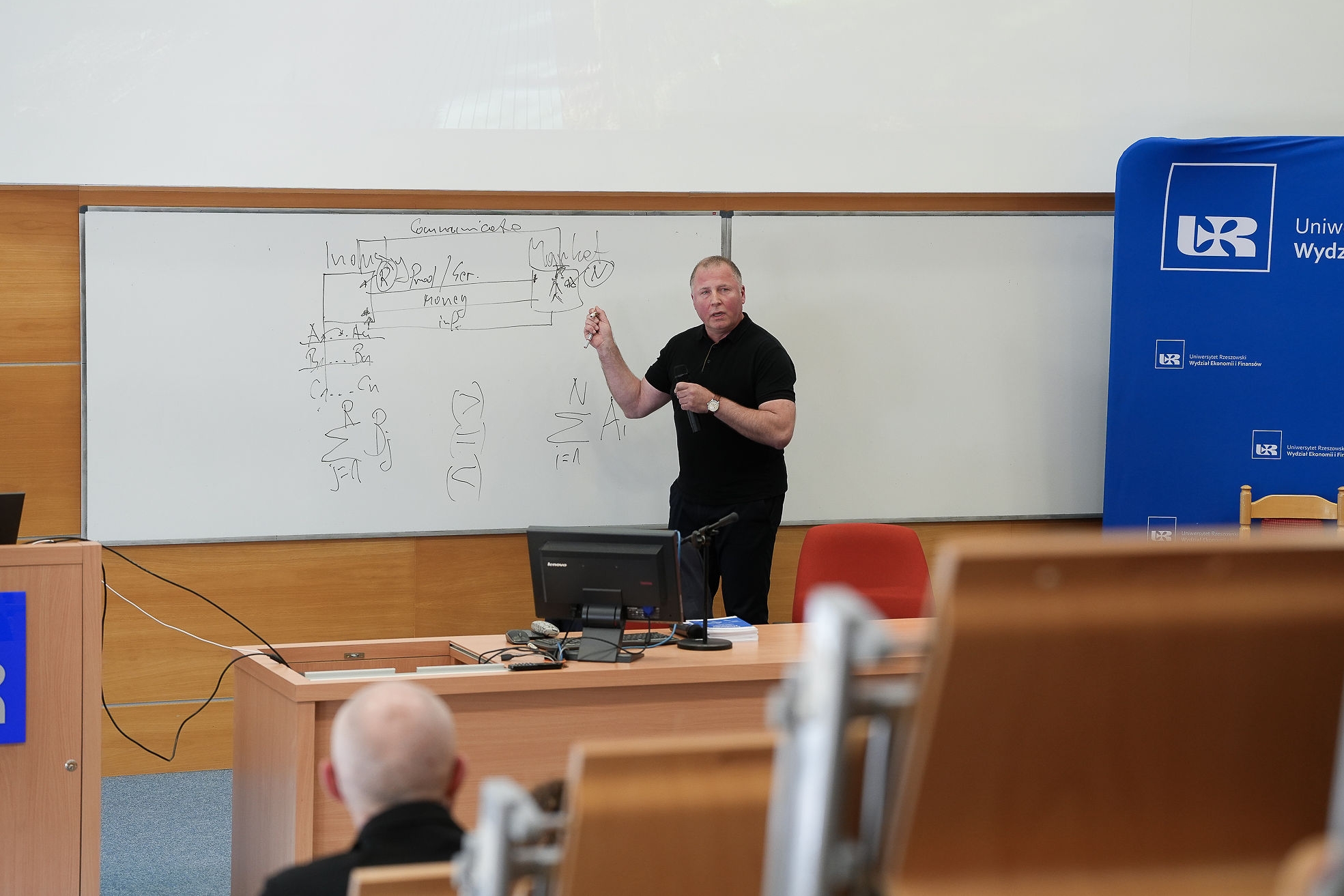
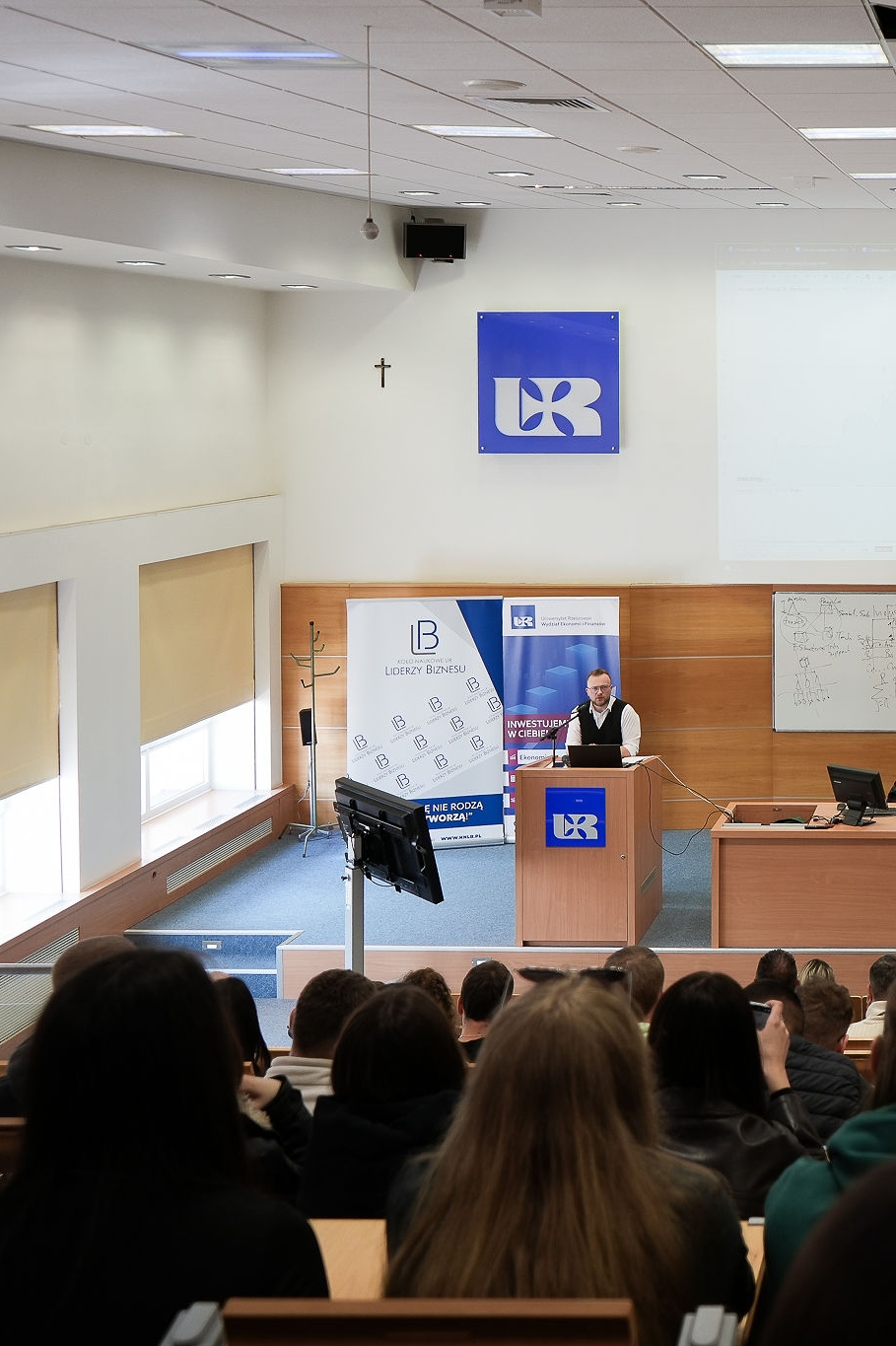
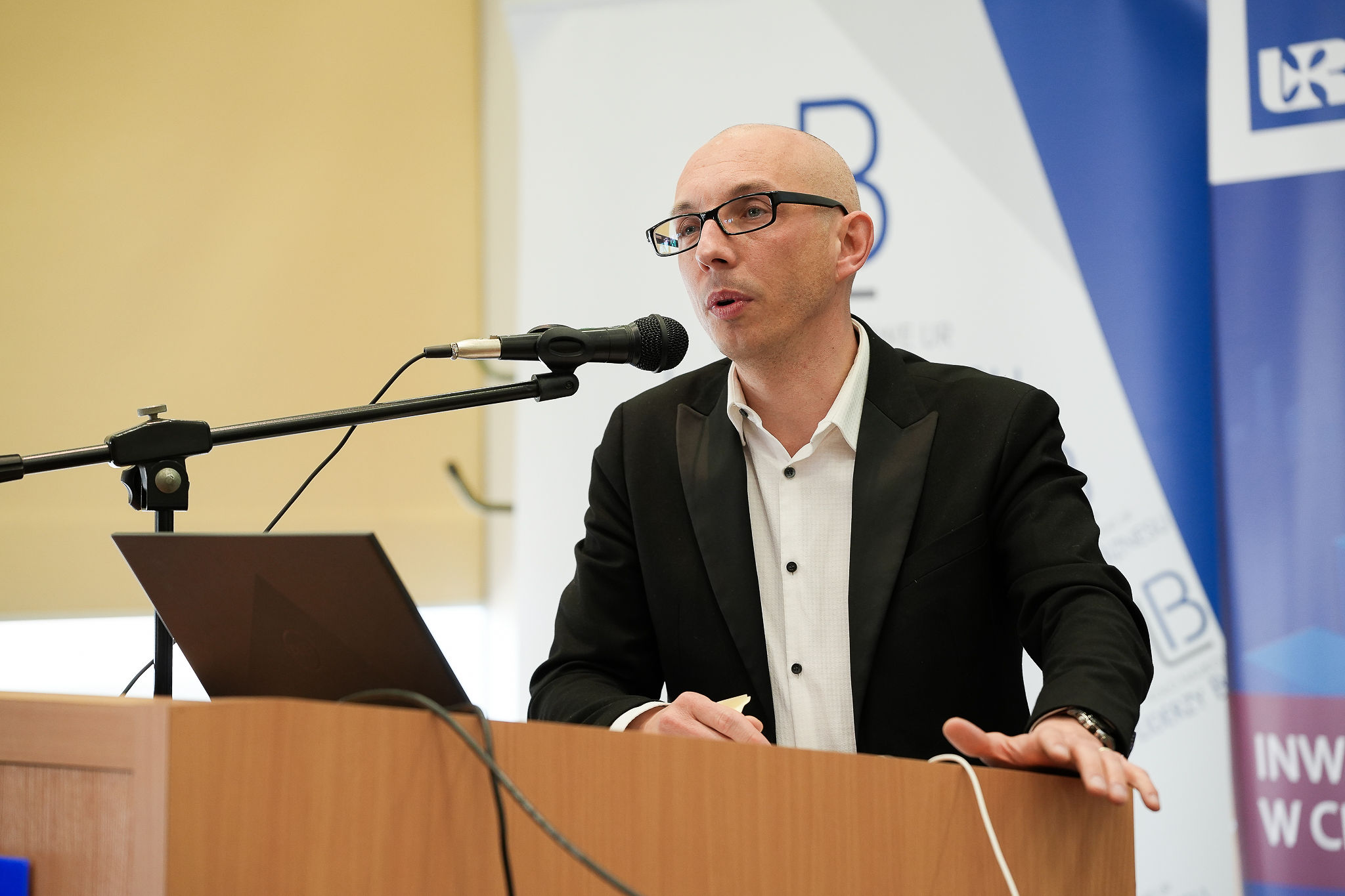
On April 21, 2026, the Faculty of Economics and Finance hosted the event “Campus Without Borders – International Academic Exchange Day,” organized and coordinated by PhD Piotr Cyrek and MSc Hubert Leśniak. The meeting brought together University of Rzeszów students, Erasmus+ participants studying at the Faculty of Economics and Finance, pupils and students from Turkey, Greece, and Croatia participating in the “Ctrl Your E-Destiny” project under the Erasmus+ programme, coordinated by Zespół Szkół Agrotechniczno-Ekonomicznych im. KEN in Werynia, as well as pupils from this school covered by a cooperation agreement with the University of Rzeszów. The event created a space for the exchange of knowledge and experience in the fields of economics, entrepreneurship, its financing, and the functioning of the modern market. The agenda included a series of expert presentations and a panel discussion with international students.
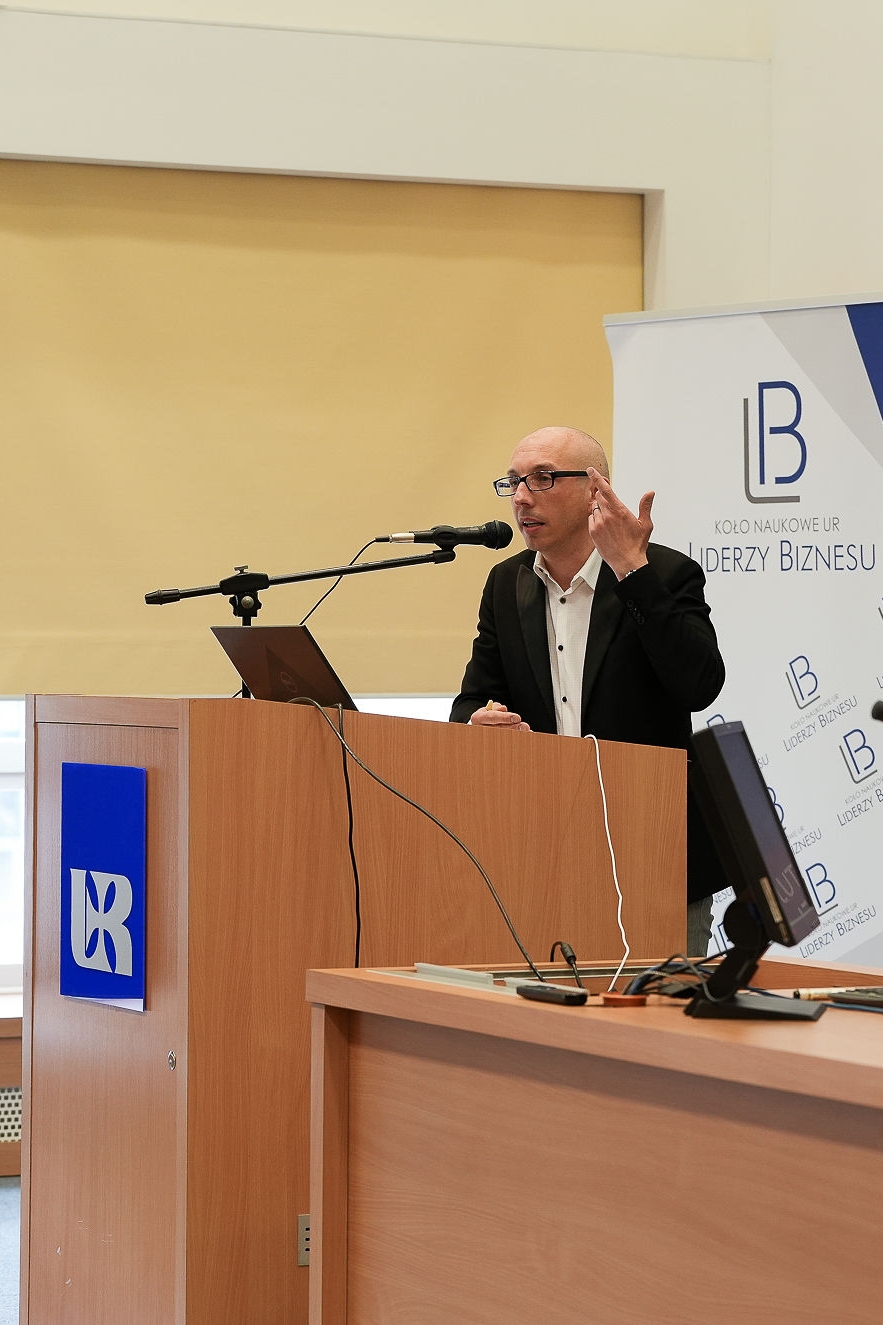
The event was opened by the Dean of the Faculty of Economics and Finance, UR Professor Bogdan Wierzbiński, who in his lecture titled “Business Environment – Opportunity or Threat?” presented the complexity of the contemporary economic environment. He pointed to the dynamic nature of changes affecting businesses and the need for continuous adaptation. He discussed both the potential benefits of globalization and technological progress, as well as threats related to market instability and increasing competition. He emphasized the importance of environmental analysis as a basis for rational business decision-making and noted that the ability to respond to change is one of the key factors of business success.
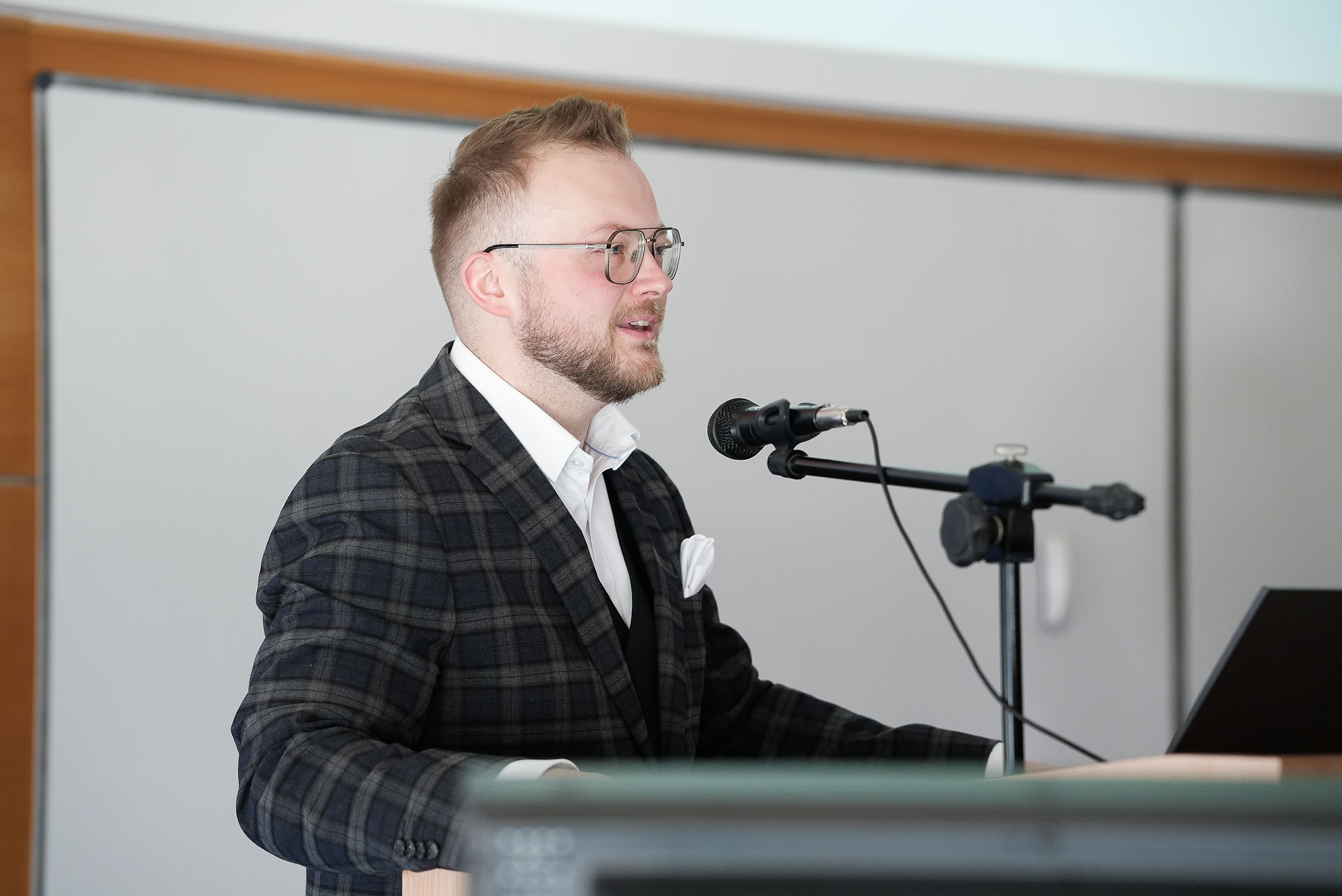
Next, MSc Hubert Leśniak, in his presentation “Where Do Companies Get Capital From? A Brief Guide to the Financial Market,” outlined the main sources of business financing. He presented the division into internal and external capital, discussing their significance and application at different stages of business development. He explained the role of financial institutions, such as banks and capital markets, in the allocation of funds. He highlighted the importance of selecting financing sources consciously in the context of risk and costs, emphasizing that effective financial management is the foundation of a company’s stable operation.
The following presentation, delivered by MSc Radosław Pyrek and titled “Being Entrepreneurial – Creativity and Taking Action,” focused on the essence of entrepreneurship as a key competence in the modern world. The topic of entrepreneurship was discussed from a practical perspective, emphasizing that it is not limited solely to running one’s own business but primarily represents a specific way of thinking and acting in everyday life. Particular emphasis was placed on creativity, understood as the ability to generate new ideas and seek unconventional solutions. At the same time, it was pointed out that moving from idea to action is crucial, as the effectiveness of entrepreneurship depends on courage, commitment, and consistency in pursuing goals. The importance of qualities such as responsibility, cooperation skills, and perseverance as key elements supporting the development of entrepreneurship was also highlighted.
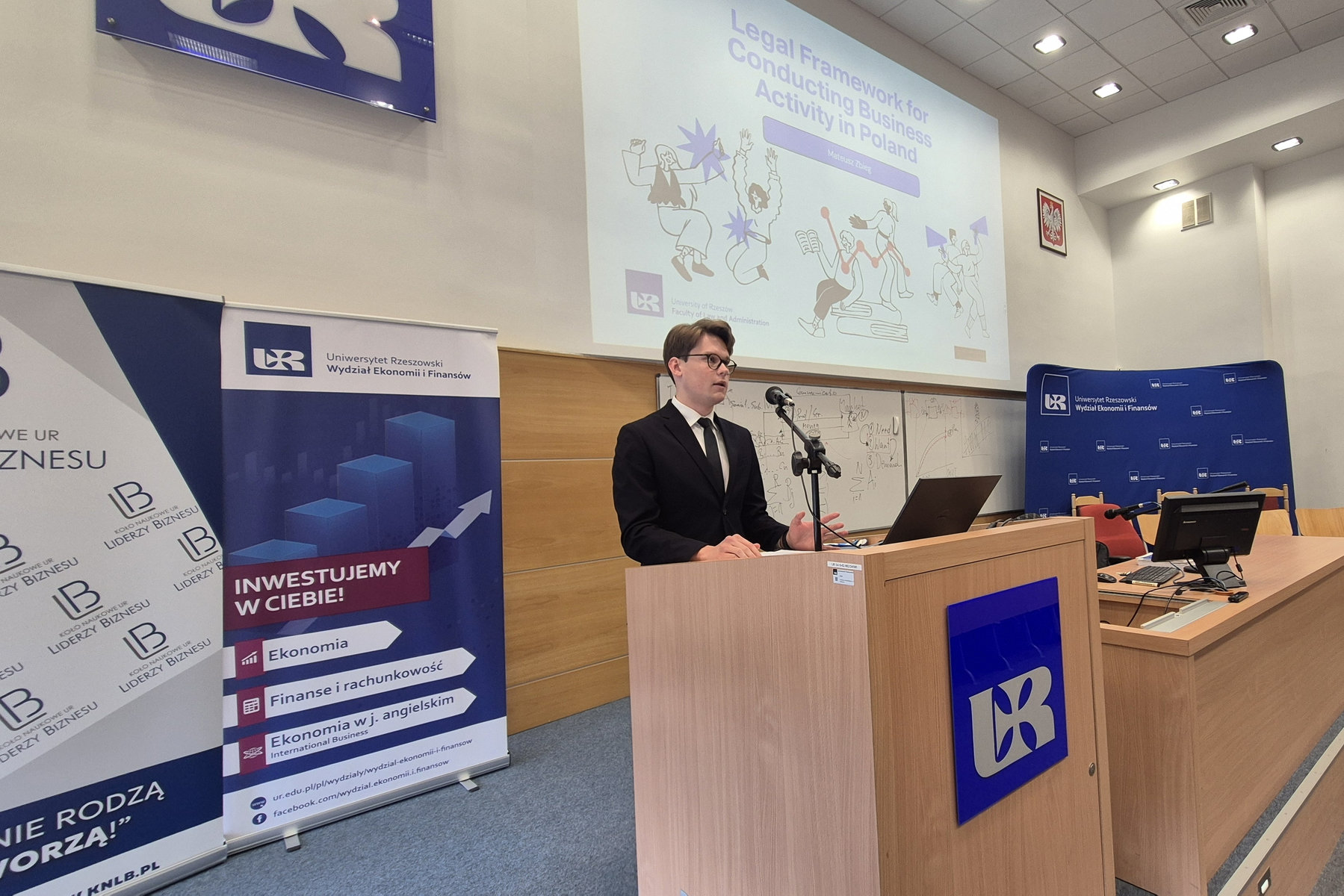
In the next part of the meeting, Mateusz Zbieg, a student at the Faculty of Law and Administration, in his presentation “Legal Conditions of Conducting Business Activity in Poland,” discussed the basic legal aspects related to running a business. He presented the available organizational and legal forms of business activity along with their characteristics. He explained the obligations of entrepreneurs arising from legal regulations, including those related to taxation and administrative requirements. He emphasized the importance of legal knowledge in minimizing legal risk and noted that proper formal preparation is an essential element of conducting business safely.
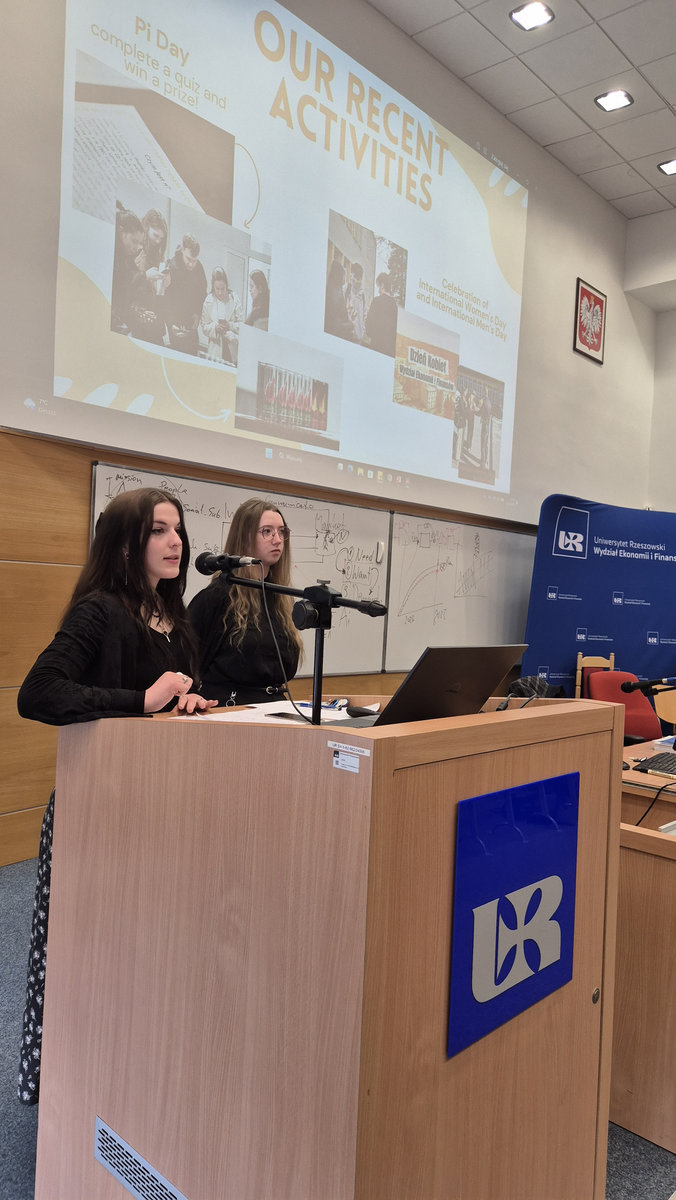
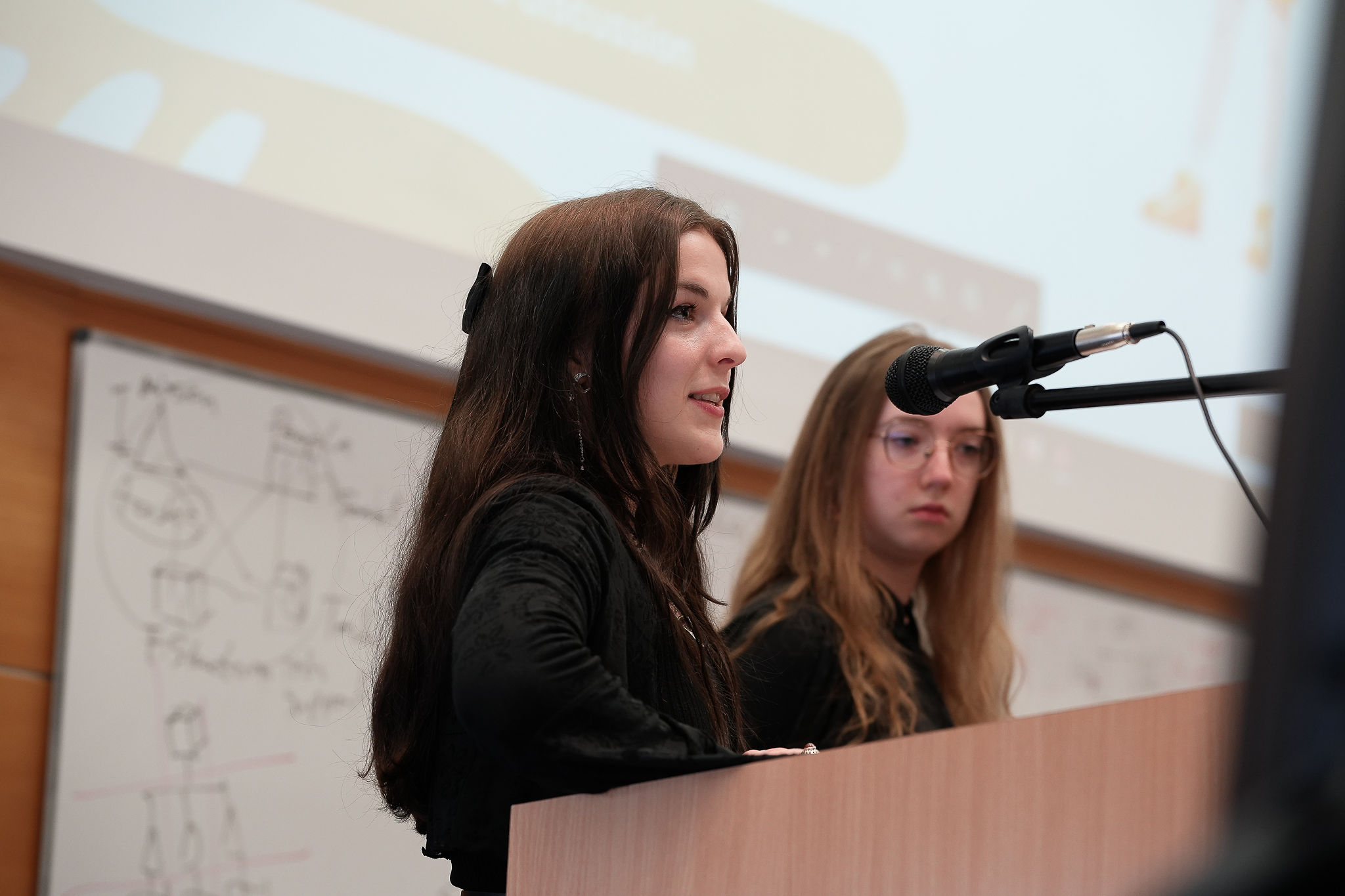
Next, Daria Ziemba and Wiktoria Bryg presented the activities of the Student Union and Student Research Clubs of the Faculty of Economics and Finance. They outlined the scope of initiatives undertaken by students and opportunities for involvement in scientific and organizational projects. They emphasized the role of student activity in developing interpersonal and organizational skills, as well as the importance of cooperation and relationship-building in the academic environment.
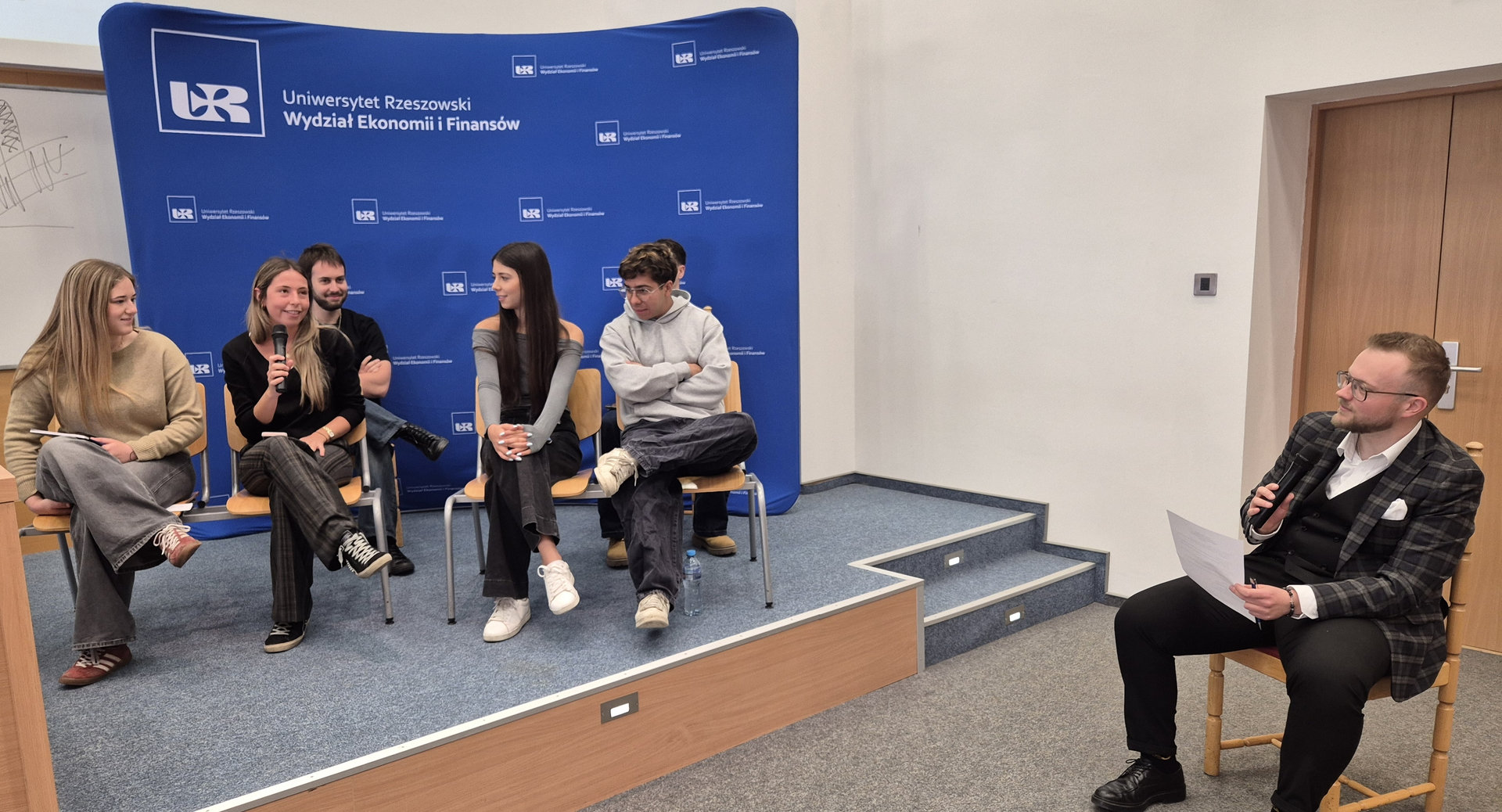
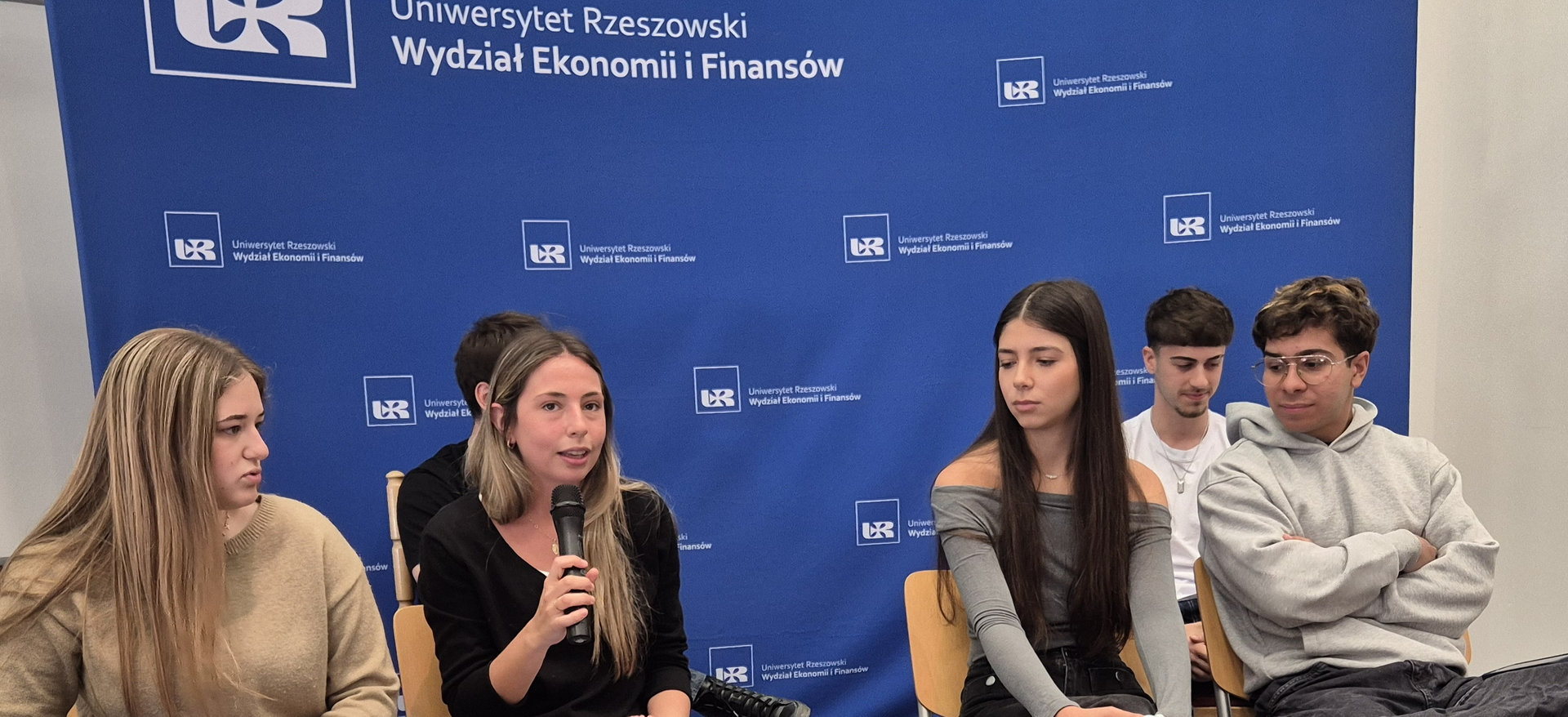
After the break, a panel discussion with Erasmus+ students took place, moderated by MSc Hubert Leśniak. Participants shared their experiences related to studying abroad. They discussed cultural and educational differences encountered at partner universities. They pointed to the development of language skills and adaptability as key benefits of participation in the programme. They emphasized the importance of academic mobility in increasing opportunities on the labor market and noted that participation in Erasmus+ fosters openness and independence.
The “Campus Without Borders – International Academic Exchange Day” concluded with an emphasis on the importance of international cooperation in education and the role of interdisciplinary knowledge in preparing students for the challenges of the modern labor market.
Photos: Łukasz Lewandowski, Piotr Cyrek